Let's start here: this is real, and it's temporary
You stopped taking birth control. You expected your libido to come roaring back like it had something to prove. Instead, what you got was... quiet. Or maybe flatlined. Or maybe just confusing inconsistency. Horny one day, indifferent the next. Your body feels like it's running on someone else's schedule.
Here's what's actually happening: hormonal birth control suppresses arousal by design. It tanks testosterone, stabilizes estrogen at a level that mutes desire signals, and basically tells your nervous system "this is not a priority right now." When you stop, your body doesn't flip a switch. It gradually remembers how to produce testosterone again. That rewiring takes weeks, sometimes months.
You're not broken. Your libido isn't dead. It's just slower to wake up than you anticipated.
Why the sluggish return makes sense biochemically
When you're on hormonal birth control (the pill, the patch, the ring, the shot), your body stops producing most of its own hormones. It's receiving a steady external supply instead. Your pituitary gland goes quiet. Your ovaries pump the brakes. Your testosterone, which lives in the baseline background of desire, basically flatlines.
The moment you stop taking it, your pituitary gland has to remember what it's supposed to do. Your ovaries have to ramp production back up. Your testosterone needs to circulate again. This isn't instant. It's a gradual cascade of signals that can take 3 to 6 months to fully normalize, depending on how long you were on hormones and your body's individual chemistry.
Why does this matter for pleasure? Because arousal is not a thought. It's a hormone. You can't will testosterone into your bloodstream. You can't logic yourself into wanting sex if your biochemistry isn't ready.
The mental layer underneath the hormonal one
But here's the thing nobody mentions: sometimes the hormonal delay gets tangled up with relationship stuff. If you were on birth control because you wanted to postpone kids, stopping it can stir up feelings about timing, commitment, and what sex now "means." If you were on it to manage acne or periods, stopping it means dealing with those symptoms again.
Some people stop birth control and immediately feel relieved. Their libido surges. But others find that relief is mixed with anxiety. The psychological weight of "we're not preventing pregnancy anymore" or "my body's changing again" can suppress arousal just as effectively as a hormone could.
That's why the first move isn't to buy a lemon clitoral vibrator and expect magic. It's to get honest about what else might be muting your desire.
What lemon vibrators do differently when arousal is sluggish
Let's say you've processed the emotional stuff. You're ready to reconnect with your body. Arousal is still slow to build, though. Your clitoris doesn't respond to mental fantasies the way it used to. Your partner's touch feels nice but doesn't light anything up.
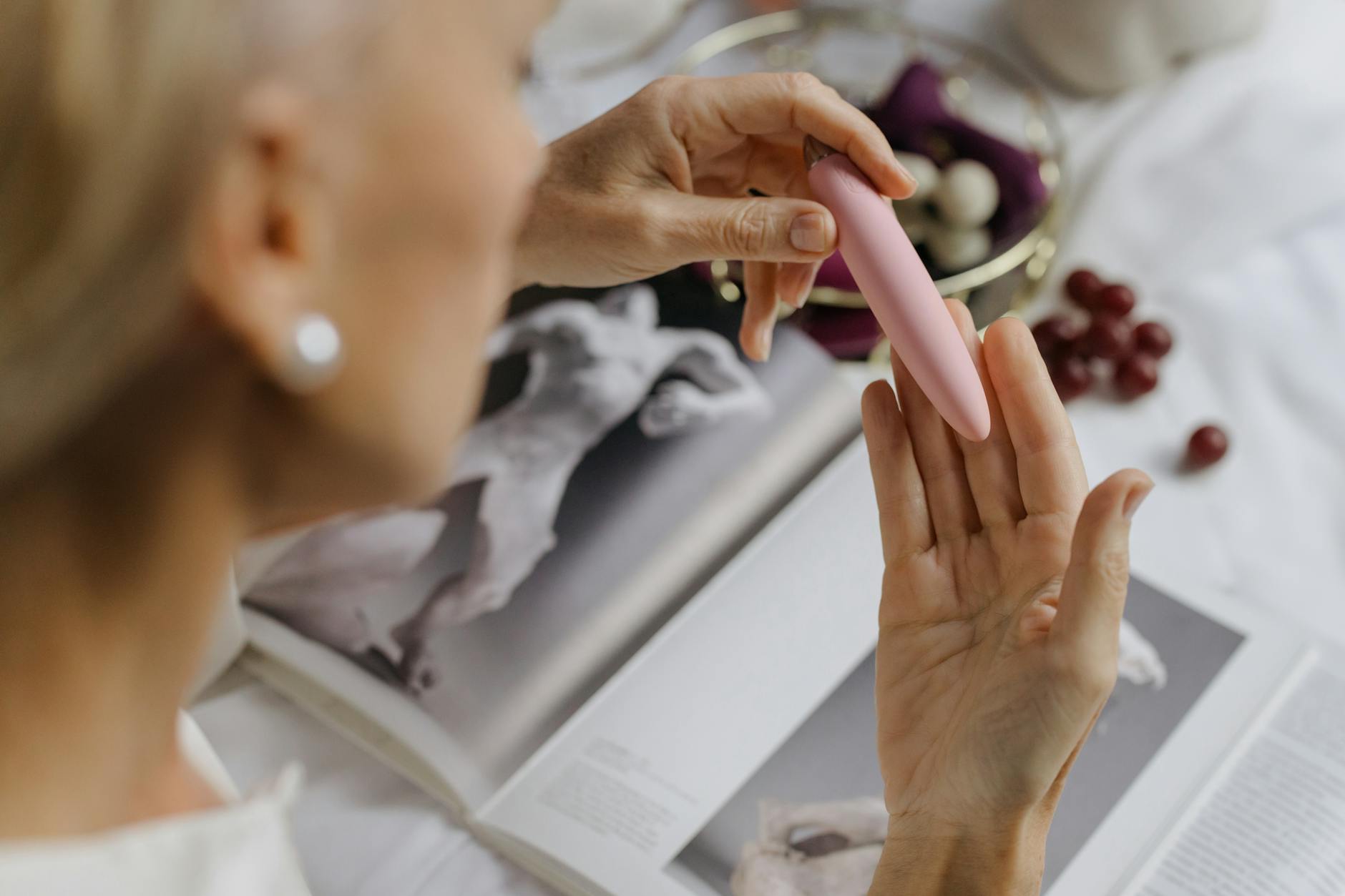
This is where the Lem and other lemon sexual toys come in. They work particularly well during the post-birth-control transition because they don't require you to generate arousal on your own. They create it.
Air-suction technology (which the Lem uses) stimulates nerve endings without requiring the same intensity of desire that traditional vibration needs. You're not starting from scratch hormonally and trying to catch up to a partner or to your own expectations. You're meeting your body where it actually is.
The Lem vibrator works in patterns, not just raw speed. That matters. When libido is sluggish, your clitoris might not respond to straight-ahead buzzing. But a pattern that alternates intensity, builds, and releases? That mirrors the way arousal actually works when it's returning gradually.
Four practical ways to use a lemon clitoral vibrator during the transition
1. Make solo exploration your reset button. When your body is rewiring itself, partnered sex can feel like a performance. There's expectation. There's someone else's timing. Go solo first. Use the Lem on the lowest setting and just notice what your body does. No goal. No orgasm requirement. Just data.
2. Use it as a bridge, not a replacement. If you have a partner, the lemon vibrator isn't the answer to "my desire isn't back yet." It's a way to help arousal climb when it's stuck. Your partner can hold it. You can use it together. That's not a workaround. That's collaborative.
3. Time it when your body has the most baseline testosterone. Testosterone peaks in the morning and mid-cycle (if your cycle is returning). That's not a hard rule. But if you're struggling to feel anything in the evening, try mornings for a week and notice the difference.
4. Stack it with something sensory that's already working. If you know your body responds to a certain touch, a smell, a sound, or a visual. Pair that with the lemon vibrator. You're not trying to make desire from nothing. You're amplifying what's already there, even if it's subtle.
The timeline actually matters
If you stopped birth control three weeks ago and you're not wildly horny yet, that's expected. If it's been six months and you feel absolutely nothing, that's worth a conversation with a doctor. Sometimes the rebound takes longer than average. Sometimes there's an underlying thyroid issue or other hormonal hiccup that deserves investigation.
In the meantime: be patient with your body. Seriously. You spent months or years on synthetic hormones. Your system needs time to remember its own rhythm. That's not weakness. That's biology.
Reframing desire as it comes back
Here's something I tell people in my practice a lot: desire after birth control often feels different than before, not just lower. Your body has different sensitivities. Your fantasies might shift. What used to get you going might feel flat, and something unexpected might suddenly hit different.
That's not a problem to solve. It's information. Your body is telling you something about what it actually wants now, separate from hormones or a partner's preferences or your own expectations.
The lemon vibrators from Hello Nancy Lemons Shop aren't a solution to slow libido. They're a tool for listening to your body while it figures out its new normal. When you pair that with patience and understanding your pleasure cycle, the return usually feels less like a crisis and more like a transition you can actually navigate.
When to check in with a doctor
If months have passed and libido hasn't improved, or if you're also experiencing irregular periods, mood changes, or pain, talk to a doctor. Sometimes stopping birth control unmasks an underlying condition (like PCOS or endometriosis) that does suppress desire. Sometimes your body just needs more time than average. Sometimes it's worth exploring whether something else is pulling your attention from pleasure.
But most of the time? This returns on its own. Your body knows what to do. It just needs you to stop rushing it.
FAQ: Your questions about libido after stopping birth control
How long does it usually take for libido to return after stopping hormonal birth control?
For most people, noticeable changes happen within 3 to 6 weeks, but full hormonal rebalancing can take 3 to 6 months. Some people feel the shift immediately. Others need the full timeline. Your previous cycle history, how long you were on birth control, and your individual biochemistry all affect the pace. If nothing has changed after 6 months, that's worth discussing with a provider.
Can using a lemon vibrator help jump-start desire when libido is slow?
Yes, in the sense that stimulation itself can create arousal. You're not waiting for desire to show up before using a clitoral vibrator. You're using it to help your body remember what arousal feels like. The Lem's pulsing patterns are particularly helpful because they don't require you to be already turned on. They build arousal gradually, which matches where your body actually is during the transition.
Is it normal to feel nothing when my partner touches me after I stop birth control?
It's common, and it's usually temporary. Birth control flattens sensation in some people. When you stop, your body's receptiveness to touch often returns slowly, not dramatically. Your partner's touch might not trigger anything because your body isn't running the chemical signals that say "this is arousing" yet. That's not about your relationship. It's about rewiring.
Will my libido eventually feel the same as before I started birth control?
Sometimes it's higher. Sometimes it's different but not lower. Rarely, it stays sluggish. A lot depends on what caused you to start birth control in the first place. If it was for contraception alone, most people experience a return to baseline or better. If birth control was managing something else (like PCOS or endometriosis), those conditions might still affect desire even after you stop. Talk to your doctor about what to expect given your history.
Should I be using a lemon sexual toy if my partner and I are trying to conceive?
Absolutely, if you want to. Solo pleasure or partnered pleasure with toys isn't mutually exclusive with trying to conceive. In fact, understanding your own arousal and pleasure during this transition can take pressure off the process. Use the Lem whenever it feels good. Pleasure and conception aren't competing priorities.
What if my partner wants sex but I'm not feeling it yet after stopping birth control?
Have the conversation early and clearly. "My body is rewiring itself. I'm not unattracted to you. Arousal is just taking longer to build right now." That's not a rejection of them. It's accurate information about your timeline. Use that window to explore how a lemon clitoral vibrator works for both of you, so sex doesn't feel like a chore while your hormones stabilize.
The bottom line
Your libido didn't disappear. It's just slower to show up than you expected. That's frustrating, especially if you spent years waiting for this moment. But it's also totally workable. Give your body time. Use tools like the Lem when you want to meet your desire halfway. And remember: this phase is temporary. Your sexuality isn't broken. It's just on a different schedule than you thought.
If you want to talk through what's happening with your desire during this transition, reach out to Hello Nancy Lemons Shop. We're here to help you navigate it.