Let's name what's happening
You're with your partner. Things are moving along the way they usually do. But something's off. You're present physically, sure, but mentally you're somewhere else. The pleasure isn't connecting. It feels like you're watching yourself have sex rather than actually feeling it.
This is disconnection, and it's wildly common. It's not a sign your relationship is broken. It's not a sign you don't want your partner. It's often a sign that you've lost touch with your own sensation.
Why disconnection happens during partnered sex
Here's the thing nobody really talks about: during partnered sex, your brain is doing a lot of work that has nothing to do with pleasure. You're monitoring your partner's pleasure. You're thinking about what you look like. You're wondering if you're taking too long. You're managing the dynamic, the timing, the narrative.
Your nervous system splits attention between connection and performance.
When this happens consistently, your body starts to feel less like yours. The sensations become background noise to the mental work you're doing. Sex becomes a script you're running instead of an experience you're having.
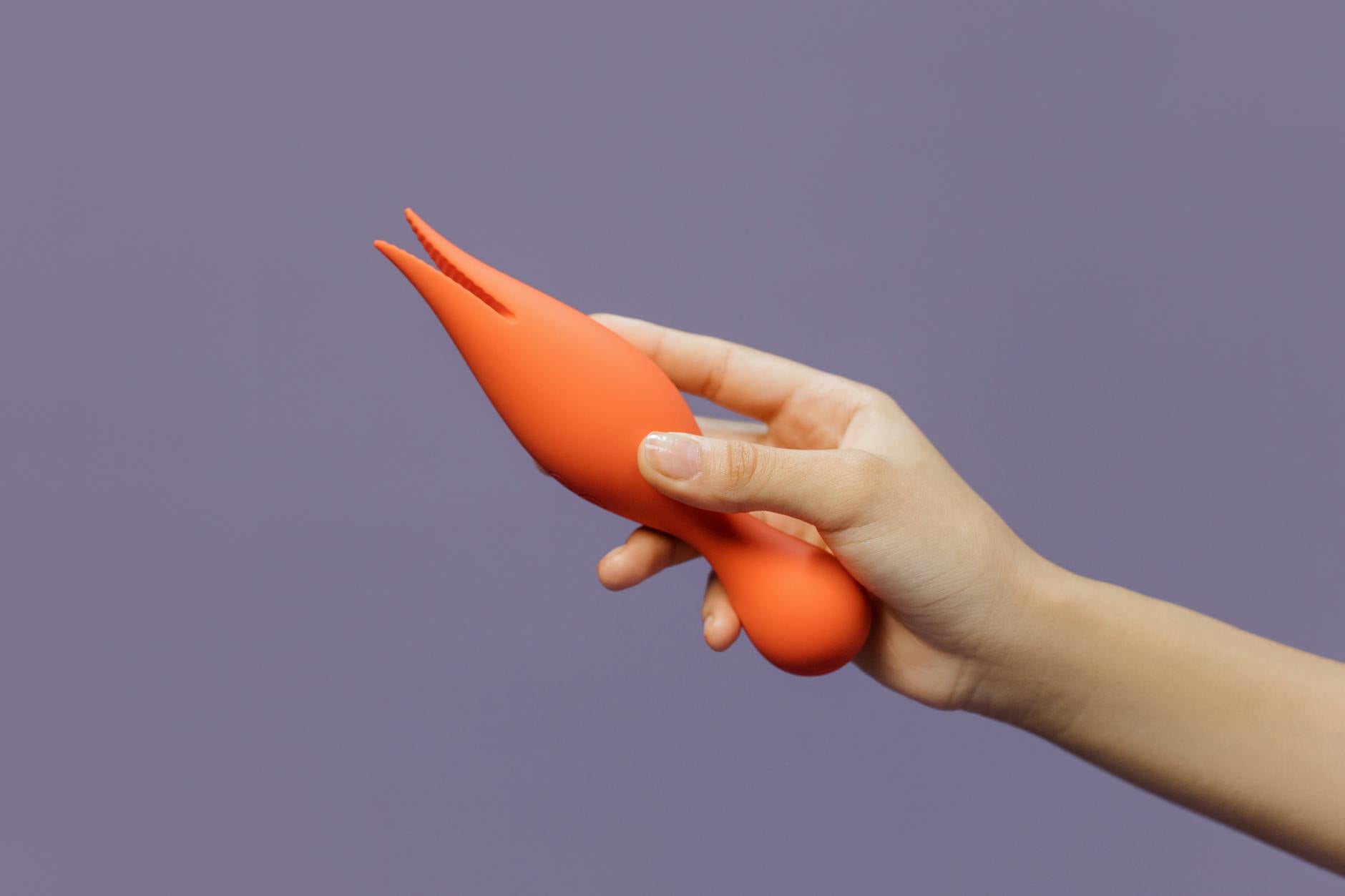
Adding a lemon clitoral vibrator to partnered sex does something specific: it gives your nervous system a single, intense focus point. It pulls your attention out of performance mode and straight into sensation.
How direct clitoral stimulation rewires the moment
The clitoris has about 8,000 nerve endings packed into a tiny space. When a lemon vibrator engages that area, it's not subtle. Your brain gets a signal it can't ignore.
That signal is so loud that all the background noise stops. You can't think about what you look like when you're experiencing something that intensely pleasurable. You can't perform. You can only feel.
And here's the connection part: when you drop into your own pleasure fully, your partner feels it. Your body relaxes. Your breath changes. Your responses become real instead of managed. That authenticity is what actual intimacy is made of.
Starting the conversation with your partner
If you've never introduced a toy into your partnership, this is the moment to be direct. "I've been feeling a bit checked out during sex, and I want to fix that. I want to be more present with you, not less. I'm thinking a vibrator might help me get back into my body. Would you be open to trying that together?"
Frame it as a tool for your pleasure, which increases theirs. Because it does.
If your partner is nervous, watch how other couples navigate toys together. That post covers the specific conversation moves that actually work.
Some partners want to control the vibrator. Some want to watch. Some want to use it on you while you're together. All of those are valid starting points. The point is: you're collaborating on your own reconnection.
Positioning for actual presence
Disconnection often gets worse with positions that demand a lot of mental navigation. Missionary or spooning, where you can breathe together and maintain eye contact, work better.
Start with foreplay. Build arousal naturally the way you normally would. Then introduce the vibrator. A lemon sucker vibrator or the classic Lem design lets you or your partner find the right angle without awkward repositioning.
Don't jump straight to the strongest setting. Start at pattern 1 or 2. Let your body remember what it feels like to chase sensation rather than manage it.
Here's what changes: instead of waiting for your partner to bring you to a certain point, you're now driving your own pleasure curve. Your partner gets to witness it. They get to participate in it. That's a completely different experience than what you've been having.
The role of deliberate slowness
One of the reasons disconnection happens is pace mismatch. Your partner moves at a rhythm that doesn't match your arousal timeline. You adapt instead of communicating. Over time, that adaptation becomes autopilot.
Using a vibrator gives you permission to slow down. It gives you something to focus on that isn't about matching somebody else's rhythm. You can actually tell your partner: "Stay with me here. This is what I need." And the vibrator becomes proof of concept.
Slow sex with a clitoral vibrator is completely different from quick sex. You get to build the arc of your own pleasure, and your partner gets to be present for it instead of driving it.
What happens to presence when pleasure gets real
When you're genuinely in your body, everything shifts. Your partner can feel the difference in how you move. The quality of your touch changes. Your eye contact becomes real instead of performed.
This is when couples report feeling closer than they have in years. Not because the vibrator is magic. Because you've both dropped the performance, and what's underneath is actual connection.
Many people who felt disconnected find that once they've had that experience, they can access it again without the vibrator. Your nervous system remembers what real presence feels like. But there's no shame in needing the tool to get there, and no reason to stop using it just because you've found it once.
Managing vulnerability in the moment
Using a vibrator during partnered sex can feel vulnerable. You're literally showing your partner exactly what feels good, which means they know where you're not satisfied otherwise.
That vulnerability is exactly the bridge back to connection. When emotional intimacy feels distant from physical connection, the path back often starts with that exact honesty.
Talk about it before you start. Say: "I might feel shy about this. That's just me, not how I feel about you or us." Naming the vulnerability reduces it.
Why sensation-focused sex rebuilds intimacy
Disconnection usually happens because you've shifted into a performance mindset. You're orchestrating instead of experiencing. A lemon clitoral vibrator forces you back into sensation. It says: this is what matters right now. This moment. This feeling. This body.
When both partners lock into that, the intimacy follows. It's not abstract or spiritual. It's physical. It's present. It's real.
Aftercare and connection after
Don't rush. After sex with a vibrator, skin-to-skin contact matters more than usual because you're both coming down from heightened sensation. Stay close. Talk about what worked. Ask your partner what they felt or noticed about you.
This is where the disconnection actually reverses. Because now you're integrating the experience. You're building a shared story about what just happened instead of both retreating into your own heads.
People also ask
What if my partner feels threatened by a vibrator?
That's actually common, and it's worth understanding rather than dismissing. A lot of people internalize the message that a vibrator means they're not enough. That's not true, but the fear is real. Start by saying: "This isn't about you. It's about me getting back into my own body, which actually makes me better with you." Offer to use it together. Let them control it. Watch them realize that your pleasure becomes their pleasure when it's genuine.
Can a lemon vibrator help if we're in a really disconnected place overall?
A vibrator can help with physical disconnection. But if the disconnection runs deeper into emotional stuff, that's worth exploring separately. A therapist who specializes in couples work can help you figure out whether it's a sex-specific issue or a sign of something bigger. A vibrator is a tool for presence, not a fix for fundamental relationship problems.
How do I know if I'm using the vibrator for the right reasons?
If you're using it to avoid talking about disconnection, that's not the right reason. If you're using it because you want to feel pleasure and presence again, and you're willing to communicate with your partner about it, that's exactly right. Honest motivation matters.
Is there a difference between a lemon clitoral vibrator and other types?
A suction-style vibrator like the Lem creates a different sensation than a traditional bullet or wand. It's gentler on the clitoral tissue, which means you can use it longer without numbness. Some people find that a gentler sensation actually helps them stay present instead of chasing an intense finish. It's worth trying different types to see what your nervous system responds to.
What if disconnection keeps happening even with a vibrator?
Then the vibrator might be helping, but something else is also in the way. Stress, resentment, fear, grief. Those things live in the body and show up as disconnection. You might need to talk to someone who can help you figure out what's underneath.
How do I bring this up if we've never talked about toys before?
Be honest. "I've noticed I'm not as present during sex as I want to be. I miss feeling close to you. I'm wondering if trying something new might help me get back into my body. What do you think?" That's it. You're not asking permission to cheat. You're asking to solve a problem together.
The point
Disconnection during sex isn't a relationship death sentence. It's often a sign that you've lost touch with your own pleasure, and you need something to help you find it again. A lemon clitoral vibrator can be that thing. Not because it's magic. Because it forces your nervous system to stop managing and start feeling. And feeling is where intimacy actually lives. If you're ready to explore what works for your body, reach out. Hello Nancy Lemons Shop is here to help you find exactly what you need.