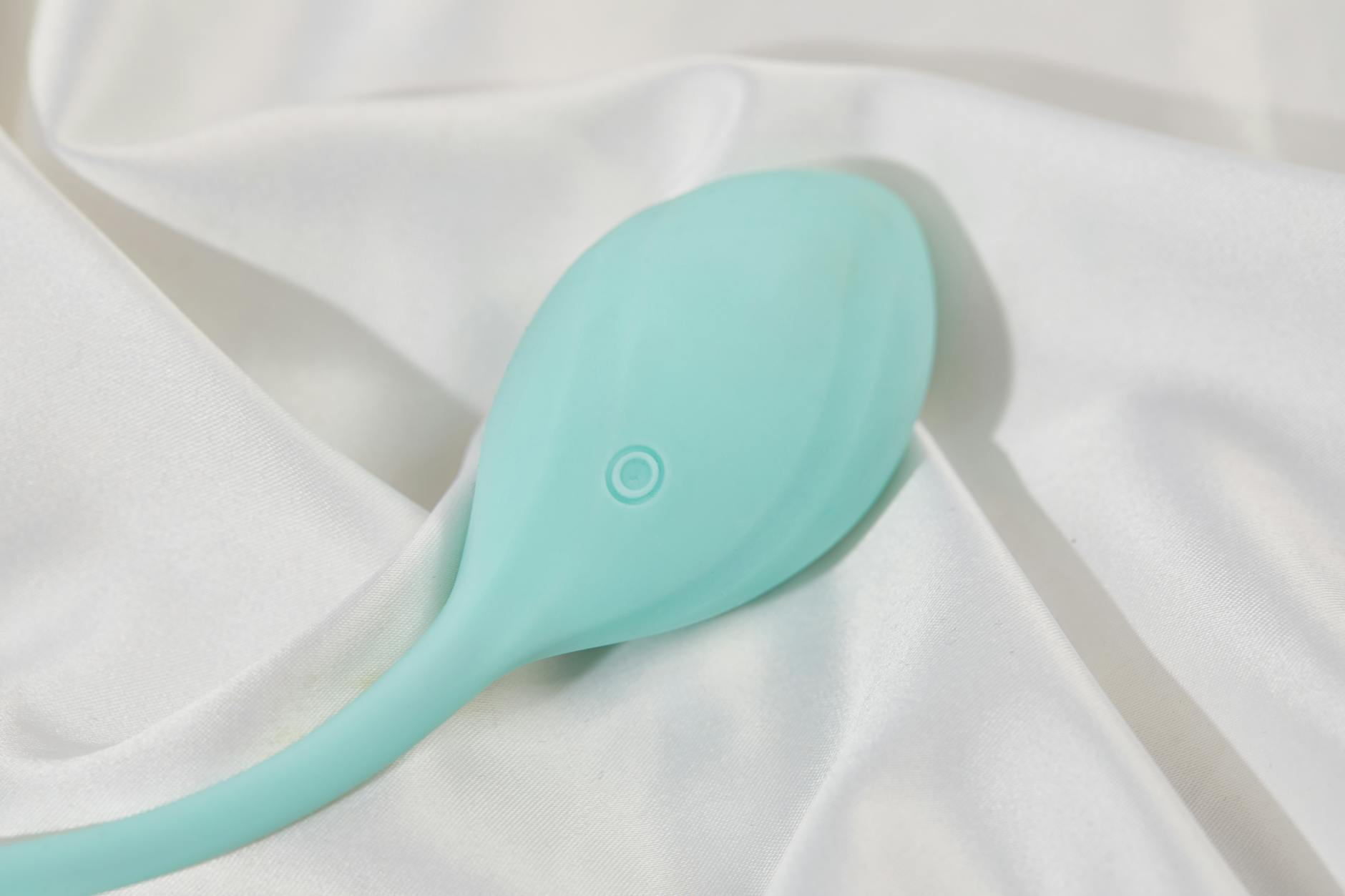
Let's start with the honest part
Your body isn't betraying you when your favorite toy feels uncomfortable one week and absolutely perfect the next. Your clitoris isn't sensitive or broken. It's responding to something real: the hormonal tide that runs through your entire cycle. And if you use a lemon vibrator or any clitoral toy regularly, you've probably already noticed this shift without quite knowing why it happens.
Here's what's actually going on physiologically, and what it means for how you use your lemon sucker.
How hormones reshape clitoral sensitivity
Your menstrual cycle isn't just about your uterus. Estrogen and testosterone surge and dip in patterns that reshape how sensitive your clitoris is to touch and vibration. Think of it like this: during certain phases, your clitoris is essentially turned up to 11. During others, it needs more direct stimulation to reach the same sensation.
In the follicular phase (days 1-14 of a typical 28-day cycle), estrogen is climbing. Blood flow to the genitals increases. The clitoral tissue swells slightly. Nerve sensitivity goes up. This is when many people report that clitoral vibrators feel most intense. The same pattern on your Lem vibrator that felt tolerable last week can feel almost too much now. This isn't weakness. This is biology working correctly.
During ovulation (roughly day 14), testosterone peaks alongside estrogen. Combined, these hormones make the clitoris hypersensitive. This is evolutionarily designed to increase desire right when fertility peaks. Practically speaking, this is often when people need to dial back the intensity of their lemon clitoral vibrators or start at lower patterns and build slowly.
Then comes the luteal phase (days 15-28), when progesterone rises and estrogen drops. Blood flow to the genitals decreases. Clitoral tissue is slightly less engorged. Sensitivity dulls. Stimulation that felt perfect during ovulation might feel muted now. You may need higher intensity settings, longer warm-up time, or more direct sustained pressure.
The intensity cliff you didn't know you had
Many people describe a sharp drop in sensitivity starting around day 15. This isn't psychological. It's measurable. Studies show that clitoral sensitivity to vibration actually decreases during the luteal phase. Your lemon sexual toy isn't broken. Your nervous system has genuinely become less responsive to the same input.
This matters because a lot of people respond by assuming they need a stronger vibrator, when really they just need to adjust settings based on cycle timing. If you only use your clitoral vibrator during your luteal phase, you might not realize that a lower pattern during ovulation would feel almost intense. Conversely, if you set your favorite intensity during your follicular peak, you may find it uncomfortable by week four.
The shift isn't subtle for everyone. Some people report a two to three setting difference between their most and least sensitive times. Others notice the change more in how long it takes to warm up. Either way, it's worth paying attention to.
Why lemon vibrators specifically are good for tracking this
Air-pulse lemon clitoral vibrators like those from Hello Nancy are excellent for cycling sensitivity because they offer graduated intensity levels. You don't need to buy three different toys. You can start at pattern 2-3 during your peak sensitivity window and shift to pattern 5-6 during low sensitivity days. The Lem vibrator's suction mechanism also responds well to this kind of adjustment because you're not fighting friction the way you might with a traditional vibrator.
Water-based lubricant becomes even more important during low-sensitivity phases. Not because there's anything wrong with you, but because reduced blood flow during the luteal phase means less natural lubrication. Adding lube isn't optional for many people during this window. It changes the sensation from irritating to exactly what you need.
Tracking your own cycle sensitivity pattern
Here's what I recommend to anyone who uses a lemon sucker or other clitoral toy regularly: keep a simple note of which pattern or intensity you're naturally gravitating toward each week. This takes two minutes and builds a map of your own body that's genuinely useful.
After two or three cycles, patterns emerge. You'll know whether you prefer your Lem vibrator at pattern 3 during ovulation and pattern 6 during the luteal phase. You'll know whether you need a warm-up period during certain weeks. You'll know whether sensitivity drops on day 16 or day 18 for you specifically (it varies). This isn't overthinking pleasure. This is gathering information that makes pleasure easier.
You can track this in a period app with notes, a shared calendar, or just a note on your phone that says week one through four along with your observations. The goal isn't data for its own sake. It's removing the mystery so you stop thinking something's wrong with you when really you're just in a different phase.
Partner conversations get easier with a cycle map
If you share pleasure with a partner, this tracking also transforms that conversation. Instead of saying "I don't feel like it" or "it doesn't feel as good," you can say "I'm in my luteal phase, so I need to start slower and probably use pattern five instead of three." This moves the conversation from something feeling like rejection to something feeling like collaboration.
Many couples find that incorporating cycle awareness into their intimate life actually deepens communication. You're not hiding what's happening. You're explaining it. That's the opposite of mysterious or distant. It's transparent and thoughtful.
The reality of irregular patterns
Not everyone has a textbook 28-day cycle. Irregular cycles, PCOS, hormonal birth control, and stress all shift these patterns. If your cycle is irregular, the sensitivity shift may happen at different times each month, or the intensity of the shift might vary wildly. This is normal. You're still not broken.
The same principle applies though: notice what's happening with your body and your toys, and adjust accordingly. Your Lem vibrator or other clitoral vibrator can adapt to unpredictable timing. You just need to stay curious about what your body is doing rather than assuming it should work the same way every cycle.
Hormonal birth control also changes this equation. Some people on hormonal contraceptives experience flattened sensitivity variation throughout the month. Others notice the same peaks and dips but at different times. There's no standard answer. Your body gets a vote.
When to worry vs. when it's just your cycle
There's a difference between sensitivity that ebbs and flows with your cycle and sensitivity that vanishes or becomes painful regardless of timing. If you suddenly can't tolerate any intensity at any time, or if certain patterns cause pain consistently, that's worth checking with a gynecologist. Hormonal shifts are normal. Chronic pain isn't.
If your sensitivity follows a predictable monthly pattern tied to your cycle, you've got nothing to worry about. Your body is exactly as it should be. You just needed to know how to work with it instead of against it.
The permission you didn't know you needed
Let's be direct: there's nothing wrong with having a cycle-dependent clitoris. You don't need to apologize for needing your lemon vibrator at different settings depending on the week. You don't need to pretend sensitivity is static if it isn't. Your body is responding to real chemical changes. Adjusting your approach isn't capitulating to weakness. It's being smart.
Once you stop fighting your cycle and start working with it, pleasure becomes easier, less frustrating, and honestly more intense. You're not fighting your body anymore. You're collaborating with it. That changes everything.