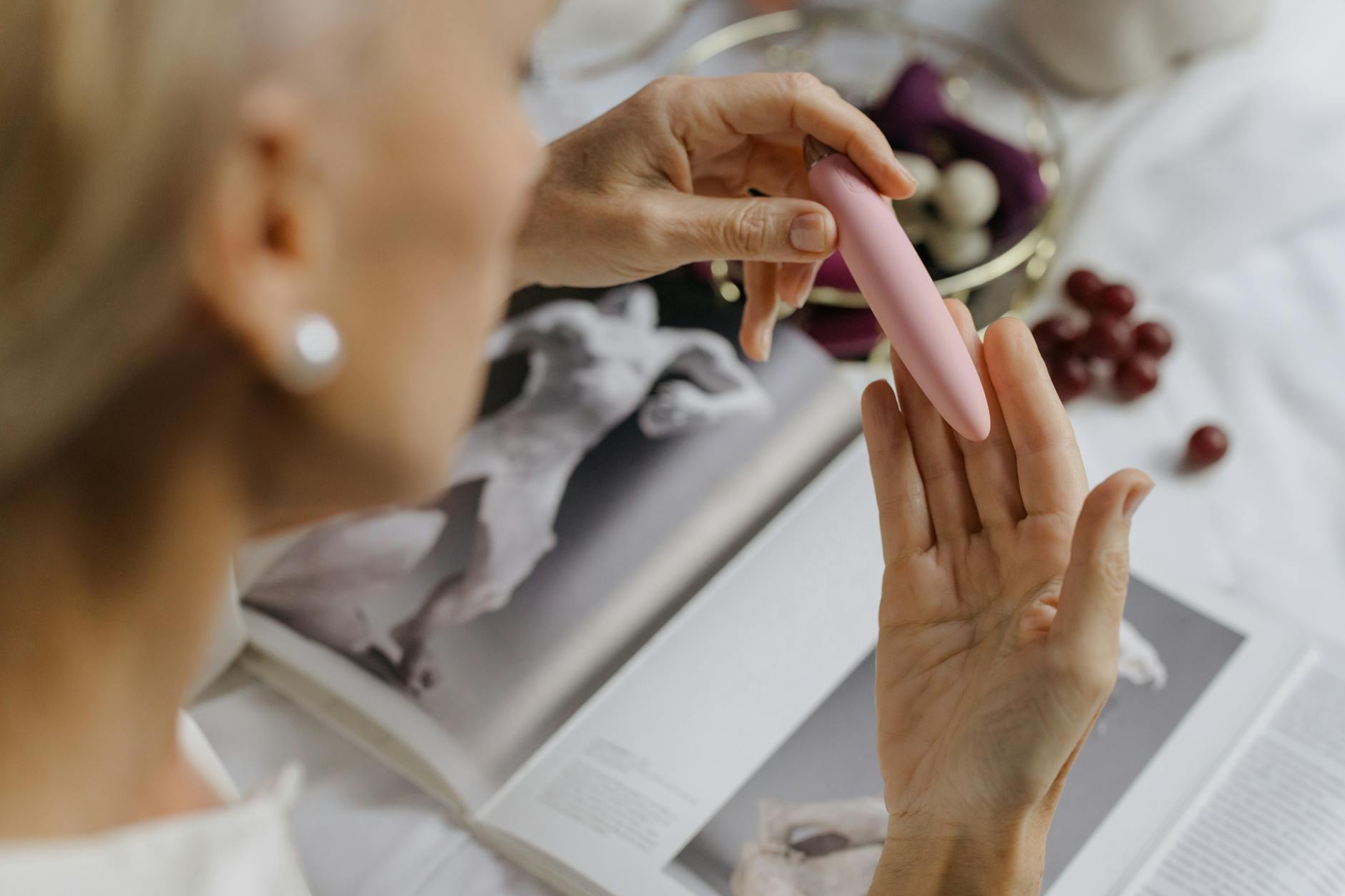
Why Lemon Vibrators Feel Different During Partner Sex vs. Solo
The exact same lemon clitoral vibrator can feel wildly different depending on who's in the room. Here's what's happening physiologically, psychologically, and how to make both work.
You're using the same lemon vibrator. The settings are identical. But the feeling? Completely different. That's not in your head, and it's not a character flaw. There's actual neurology happening here.
When you're solo, your nervous system is in one state. When a partner is present, it shifts. The arousal pathway changes. The intensity of sensation changes. The speed at which you can reach orgasm changes. Most of my clients don't talk about this openly because they assume they're doing something wrong. They're not. They're experiencing two legitimately different physical experiences.
Here's the honest part: your body knows the difference between solo and partnered pleasure at a neurological level.
When you're alone, your parasympathetic nervous system (the one that says "it's safe to relax and receive") can settle into deep calm. You control every variable. You set the pace, the pressure, the rhythm. There's no uncertainty. Your brain isn't processing another person's presence, response, or expectations.
When a partner is there, your nervous system is doing more work. Not necessarily bad work, but more. You're processing their movement, their breathing, their gaze, their touch. Your amygdala is doing a quick safety scan (even if the person is someone you trust completely). This means arousal takes longer to build because your nervous system is partially allocated to something other than sensation.
It's similar to the difference between reading alone in a quiet room versus reading in a coffee shop. The words are the same. But there's a subtle activation happening that changes how the book lands.
There are three mechanical reasons why the same clitoral vibrator can feel diminished during partnered sex:
Attention division. When you're focused on a partner, you're dividing your sensory attention. Some of that neural processing bandwidth goes to tracking their pleasure, their rhythm, whether you're aligned. With a solo toy, 100% of your focus goes to the sensation itself.
Arousal plateau instead of peak. Solo play often builds to a sharp peak. You're chasing a specific goal, and every sensation moves you closer. Partnered sex is often about maintaining a plateau while you coordinate with someone else. You might not reach the same spike in arousal that allows a vibrator to feel maximally intense.
Touch overlay. When a partner is touching you at the same time you're using a lemon vibrator, those sensations compete for your nervous system's attention. Your brain is processing both inputs. Sometimes they amplify each other. Often they create noise. The vibrator's sensation becomes one channel in a multi-channel experience, rather than the sole signal.
But here's the thing. Sometimes the opposite happens. Sometimes the exact same vibrator feels more powerful with a partner present.
This usually occurs when the partner's presence actually decreases your anxiety. If you have a history of feeling unsafe during sex, or if you're in a new relationship and there's still mystery around what your partner wants, your nervous system might be too activated for deep sensation. Alone, you might be holding tension. With a partner who's reassuring or deeply trusted, that tension might release.
When your body feels secure, more blood flows to your genitals. Your pelvic floor relaxes. The clitoral tissue becomes more responsive. In that state, a lemon vibrator can absolutely feel more intense than it does solo.
It also depends on what the partner is doing. If they're directly engaging with you (using their hands, mouth, body) while you're using the vibrator, you might be receiving stimulation on multiple sensitive areas simultaneously. That creates a compound effect that solo play simply cannot achieve.
One of the most underestimated factors in why lemon vibrators feel different is rhythm control.
When you're solo, you control the rhythm of the vibrator completely. You can adjust the setting mid-orgasm if you want. You can pause, resume, speed up, slow down. Your body and the toy are in perfect synchronization.
With a partner, rhythm becomes negotiated. Your partner might have their own rhythm. They might speed up and slow down based on what they're feeling, not what the vibrator needs. The vibrator might be set to a pattern that's perfect for you, but your partner's rhythm with their hands or body throws off that timing. These micro-adjustments might seem small, but they change whether the vibrator feels helpful or distracting.
The best partnered experiences I see are ones where the couple has actually talked about this. One person says, "When I'm using the vibrator, I need you to hold still here," or "I need you to keep a steady rhythm." You're not killing spontaneity. You're actually creating the conditions where the vibrator can do its job.
Your mind and your body are not operating independently. This is especially true during sex.
When you're solo, you might be fully present, or you might be distracted by thoughts about work, your to-do list, or whether your body looks a certain way. Distraction changes sensation. But you have control over redirecting that attention back to pleasure.
With a partner, the emotional context is different. If you're feeling insecure about your body, your nervous system picks up on that and tightens. If you're uncertain about whether your partner wants you to use a toy, that doubt actually dampens sensation. If you're worried about taking too long, your arousal pattern changes. Anxiety is the enemy of intensity.
Conversely, if you're with a partner who explicitly wants you to feel good, who's encouraging you to use whatever tools help, who's genuinely present and engaged, your nervous system says "it's safe to receive fully here." That permission creates arousal conditions that solo play often doesn't reach.
Here's something most articles on lemon vibrators and partnered sex won't tell you: what you believe about yourself affects how sensation feels.
If you grew up with shame around masturbation or pleasure, using a vibrator solo might carry some of that residual guilt. You might be giving yourself pleasure, but part of you is judging it. With a partner, especially if they're enthusiastic, you might actually feel more "allowed" to experience pleasure fully.
Or the reverse. If you're worried about taking too long, or if you've internalized the message that you "should" be able to orgasm through partnered sex alone, using a toy with a partner might feel like admitting defeat. That story in your head changes the actual sensation.
The lemon clitoral vibrators from Hello Nancy Lemons Shop work the same way solo or partnered. Your brain is what changes. And your brain can be retrained through conversation and permission.
If you want both solo and partnered pleasure with a lemon vibrator to feel good, here are the moves that actually work.
Communicate before you're in the moment. Not during foreplay. Like, days before. "When I use a vibrator with you, I want you to focus on [touching me here / staying still / matching my rhythm]." This removes the guessing game.
Establish a rhythm agreement. Some couples find that the vibrator person controls both the toy and the rhythm. The partner takes a supporting role. Others find that the partner leads the motion and the vibrator augments it. Experiment and agree on what feels coordinated, not conflicting.
Address the attention split consciously. If the vibrator feels less intense with a partner, it's not because you're doing it wrong. Your nervous system is just divided. You can reduce that division by touching your partner more, asking them to stay still while you use the toy, or finding moments of solo time with the vibrator to maintain that skill.
Check for shame or performance pressure. If using a toy with a partner doesn't feel good, sometimes it's not about the toy or the technique. It's about whether you feel safe and wanted. A good relationship coach or therapist can help untangle this.
Understanding why a lemon vibrator feels different solo versus partnered matters because it stops you from blaming yourself for not "doing it right." You're not broken. You're experiencing two different physiological states.
It also matters because knowing this helps you optimize both experiences. Solo play can be purely about sensation and your own pleasure, with no negotiation required. Partnered play can be about emotional connection and synchronized pleasure, which is its own rich thing. They're not the same experience trying to be identical. They're different experiences, each with their own value.
Most importantly, it gives you permission to use your lemon vibrator exactly as it works best in each context, rather than forcing one approach to fit both.
Your nervous system is likely in activation mode, not relaxation mode. Feeling watched can trigger a subtle anxiety response, even with a trusted partner. Your blood flow redirects slightly, your pelvic floor tightens a fraction, and sensation flattens. This is incredibly common and fixable. The solution is usually repeated exposure (your nervous system learns they're safe to watch), explicit permission from your partner ("I love watching you feel good"), or using the vibrator first and having them join afterward, so your arousal is already established.
Not really. The Lem or any lemon clitoral vibrator works the same mechanically in both contexts. What changes is how you use it, not which model you need. That said, if you're finding the vibrator feels overwhelming with a partner, sometimes starting with a lower intensity setting helps because you're receiving multiple sources of stimulation.
Absolutely. Many people find this feels more intimate. Your partner controls the rhythm and pressure, which removes that attention division for you. You can focus purely on sensation and connection. The tradeoff is that you lose direct control of intensity, so communication matters even more here.
New partners mean new nervous system activation. There's still an element of uncertainty, even if attraction is high. Your amygdala is doing a safety scan on this person's reactions. You're processing more information: Do they seem enthusiastic? Bored? Grossed out? That processing reduces the bandwidth available for sensation. This normalizes over time as trust builds and your nervous system learns this person is safe.
Yes, but not in the way you might think. The difference isn't in the vibrator itself. It's in the conversation. You might introduce it earlier in the relationship when you're talking about pleasure in general, rather than springing it out mid-sex. You might explain what it does and why you like it, not as a referendum on what your partner is or isn't providing, but as a tool that amplifies what you already share. Most partners warm up quickly once they see their partner enjoying genuine pleasure.
No. This is one of the biggest myths. Many people with very satisfied partnered sex lives use vibrators. The vibrator isn't a replacement. It's a tool that creates a different kind of sensation than a human body can. Using it has nothing to do with your attraction or commitment.
Your lemon vibrator isn't broken. Your body isn't broken. You're just experiencing two genuinely different nervous system states, and both are valid. The goal isn't to make them identical. It's to understand each one well enough to enjoy both.
If you're curious about optimizing pleasure with a partner, whether that's around communication, nervous system activation, or simply finding the right tools, reach out. That's what I'm here for. Contact Hello Nancy Lemons Shop to chat about what's actually going on with your pleasure, partnered or otherwise.