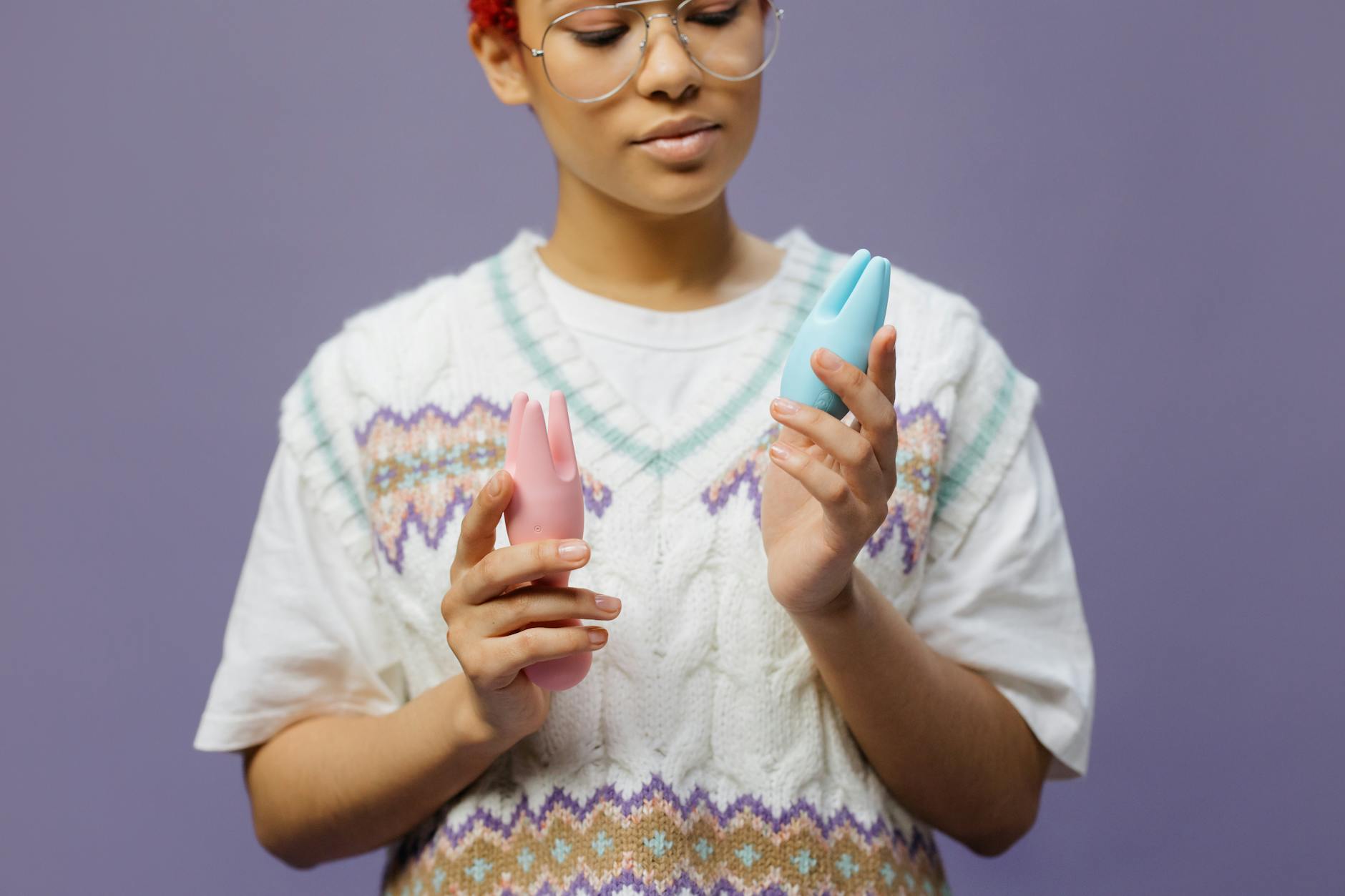
Let's be real about the awkwardness
Most people don't introduce a vibrator to their partner in a planned conversation. They just... don't mention it at all. Which creates a different kind of awkward: the moment when a lemon vibrator appears mid-sex and your partner has no idea what's happening.
There's a middle ground. It exists between "we need to have a talk" and "surprise toy." I'll walk you through it.
Why this conversation actually matters
Here's what research on couples and sexual communication shows: partners who can discuss pleasure directly report higher satisfaction and fewer conflicts down the line. Not because they're having more sex, but because they're not building resentment around unmet needs or secret desires.
Introducing a lemon vibrator isn't really about the toy. It's a conversation starter about what each of you wants, what makes you feel good, and whether you're willing to explore that together. If you skip the conversation and just introduce the toy, you might avoid awkwardness in the moment. You'll likely create it later.
The timing that actually works
Don't do this during sex. Don't do it during a conflict. Do it when you're both relaxed, clothed, and have a few minutes of actual attention for each other. Not a formal dinner. Just... a normal moment with privacy.
The best time is often right after good sex, when you're both feeling connected. Or during a casual conversation where intimacy has already come up naturally. Basically, any moment when you're already thinking about desire anyway.
How to actually say it
Start with something true about yourself, not about them.
"I've been thinking about trying something different, and I'd like your input." That's it. Most partners will ask what you mean. Then you explain.
"I want to explore clitoral stimulation in a different way. There's a lemon vibrator I'm curious about. I'm not interested in doing this alone, and I'd really like to try it with you."
Notice what's happening here: you're centering pleasure, not criticism. You're not saying "what we're doing doesn't work." You're saying "I want to expand what we explore together."
If your partner asks why, the honest answer is usually: "Because I think it might feel really good, and I want to share that with you." You don't need to defend it beyond that.
What partners actually worry about
Research consistently shows that when a partner introduces a vibrator, the other partner often interprets it as criticism. "Am I not enough?" "Does this mean they're not satisfied?" "Are they comparing me to something?"
This is why your framing matters so much. You're not replacing them. You're expanding the toolkit. If you've been having partnered sex for years without vibration, adding a lemon clitoral vibrator isn't a downgrade to what you've been doing. It's an addition to it.
If your partner expresses this concern, lean in. "I love what we do together. I also want to explore this. Those aren't in conflict." And then mean it. Don't introduce a vibrator and stop doing the things that made your partner feel desired. That's genuinely destabilizing.
The practical integration part
Once you've talked about it and they're open, here's how to make the lemon vibrator feel natural in the moment.
Start using it when you're already aroused. Not as a opener, but as part of what's already happening. Your partner touches you, builds arousal, and then you introduce the vibrator. This way it feels like an evolution of what's already happening, not a pivot.
Walking your partner through the sensations helps too. "Try moving it here" or "I like this pattern better" creates teamwork. They're not just watching. They're learning what you like, which is genuinely interesting information for anyone who cares about your pleasure.
If you want your partner to hold the vibrator, show them how. Not in a demo way. In the moment. Guide their hand. Let them feel how your body responds. This transforms it from "you need this toy" into "we're doing this together."
The conversation after the first time
Once you've actually used it together, check in. Not a formal debrief. Just a normal conversation.
"That felt really good. I liked that you were holding it. Did you enjoy that?" Listen to what they actually say. If they seemed hesitant or disconnected, that matters. If they're genuinely into it, you both know you have something new to explore together.
Many partners discover they actually love this. Not just because it leads to intense pleasure (though it does), but because it positions them as an active participant in your pleasure, not just a spectator. When your partner holds the lemon vibrator, they're making choices about rhythm and pressure. They're connected to your experience.
Compare that to using a vibrator alone, where your partner is watching but not participating. Very different experience for both of you.
If they're not into it
This is important. Some partners will be genuinely uncomfortable with vibrators. Not because of insecurity, but because it doesn't match their mental model of sexuality or their own pleasure.
If that's the case, you have some actual choices to make. You can use a lemon vibrator when you're alone and not mention it. You can negotiate: "What if we use it sometimes but not every time?" You can explore what they would be comfortable with.
But you can't make someone want something they don't want. And you also don't have to abandon your own pleasure to keep them comfortable. That's the conversation you need to have. Not about the vibrator. About what you each actually need.
When you're struggling with this kind of misalignment, that's often the moment to talk to a couples therapist. Not because something is wrong, but because you need help navigating what you each want and where the actual negotiation happens.
Why this matters beyond the toy
Introducing a lemon vibrator to your partnership is a small act with big implications. It's you saying: "My pleasure matters. I'm curious about my own body. And I want to share that exploration with you."
That's radical in a lot of relationships. Many people spend years never explicitly stating what they want. They hint. They hope their partner figures it out. They feel resentful when they don't.
Using a lemon clitoral vibrator with your partner, after an honest conversation, is the opposite of that. It's directness. It's partnership. It's saying yes to your own desires while also saying yes to your relationship.
That conversation might feel awkward for 30 seconds. The actual experience, and the connection it creates, is worth far more than that brief discomfort.
People also ask
Will using a lemon vibrator with my partner make me less sensitive to their touch?
No. Sensitivity to direct touch and responsiveness to vibration are different neural pathways. If anything, exploring vibration helps you understand your own pleasure better, which makes you more responsive overall. Research on vibrator use shows no decrease in partnered satisfaction. In fact, couples who explore toys together report higher intimacy scores than those who don't.
How do I know which lemon vibrator to choose if I'm using it with a partner?
Consider how it will work in your actual partnered scenario. Will your partner hold it, or will you? Do you want a quieter option so you can hear each other? Will you be using it during specific kinds of touch, or during other positions? The lemon vibrator's compact design makes it easier for partners to hold and control, which is why many couples prefer it to larger wands. If you're not sure, our buying guide walks through how to choose based on your scenario.
Can we use a lemon vibrator if our relationship is struggling?
Introducing a toy won't fix a broken relationship. But if you have a generally solid partnership and sex has just become routine, adding vibration can reignite curiosity. If your relationship has deeper issues, those need attention first. Sometimes that's individual therapy, sometimes couples counseling. A lemon vibrator isn't a bandage for disconnection.
What if I want to use a vibrator but my partner thinks it means they're not enough?
This is the most common worry, and it deserves a real conversation. Start by acknowledging their feelings. "I understand this might feel like criticism, and I want to be clear that it isn't." Then explain what you actually want: exploration, new sensations, expanded pleasure. If they're still struggling, ask what would help them feel secure. Sometimes that's reassurance. Sometimes it's them learning about vibration too. Sometimes it's explicitly continuing other forms of touch they love.
Is using a lemon vibrator during partnered sex actually that different from using one alone?
Yes, emotionally and practically. When you use a vibrator with a partner, you're making yourself vulnerable. You're showing them how you respond to stimulation. You're letting them participate in your pleasure. That vulnerability, combined with presence, creates a different kind of connection than solo use. Your partner also gets to discover new ways to pleasure you, which many people find deeply satisfying.
How long should we wait before introducing a vibrator if we're newly together?
There's no universal timeline, but generally, you want enough foundation that the conversation feels safe. That might be three months. It might be a year. It depends on how quickly you build intimacy and how openly you talk about sex. The question to ask yourself isn't "how long should we wait?" but "do I feel safe having this conversation with them?" If the answer is no, that's useful information about your relationship.
The bottom line
Introducing a lemon vibrator to your partner doesn't require a formal meeting, a weeks-long buildup, or hiding it until the moment of surprise. A short, honest conversation about what you want and why you want to explore it together works. Your partner's initial discomfort is normal. Their willingness to explore it with you is what matters.
You deserve a partnership where your pleasure is discussable, shareable, and worth exploring together. The conversation is the first step. Everything else follows.