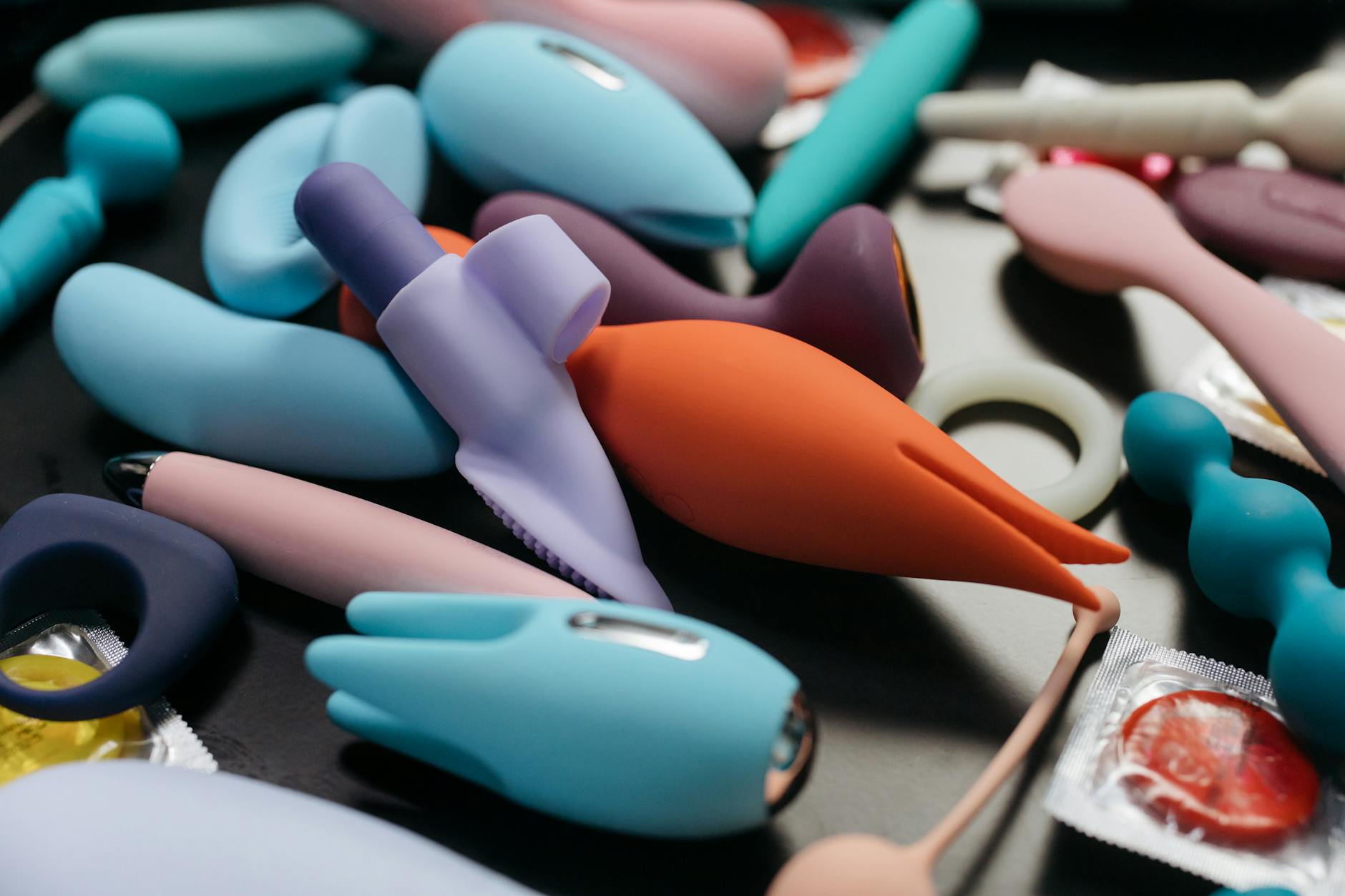
How to Use a Lemon Vibrator When Vaginal Dryness Persists Despite Lubrication
Let's be real. You've slathered on the lube. You've given it time. Your partner's been patient. And still, sex feels like sandpaper. So you add more lube. And more. And at some point you stop, because you're not fixing the problem, you're just managing it.
Here's the thing nobody tells you: vaginal dryness that won't budge even with lubrication often isn't a lubrication problem at all. It's a blood flow problem, a tissue health problem, or sometimes a nervous system problem. And when you understand what's actually happening, a clitoral vibrator becomes one of the most useful tools you have.
I've worked with hundreds of people stuck in this exact loop. The pattern is always the same. The solution is usually simpler than expected.
What vaginal dryness actually means
Dryness in the vagina happens for at least four different reasons, and lube only fixes one of them.
Reason one: thin tissue. Estrogen keeps vaginal tissue thick and plump. When estrogen drops (menopause, some medications, hormonal birth control, even just stress over time), the tissue thins. Thinner tissue produces less fluid naturally. Lube helps, but it doesn't restore the tissue itself.
Reason two: poor blood flow. Arousal is a vascular event. When you're aroused, blood rushes to the genitals, which creates swelling and lubrication. If blood flow is compromised (from medications, cardiovascular issues, poor sleep, or chronic stress), the vagina simply doesn't have the physiological resources to get wet, even if your brain is interested.
Reason three: nervous system dysregulation. Your parasympathetic nervous system has to be online for arousal and lubrication to happen. If you're chronically stressed, anxious, or in a trauma response, your body stays in sympathetic activation. That's fight-or-flight. Lubrication is a parasympathetic event. Your nervous system won't allow it, no matter what lube you use.
Reason four: medication effects. Antidepressants, antihistamines, blood pressure meds, and decongestants all suppress lubrication by reducing parasympathetic activity or blocking histamine, which is involved in the arousal cascade. Lube helps with comfort but doesn't reverse the root cause.
When you understand which one you're dealing with, the path forward becomes clear.
Why clitoral vibrators work when lube alone doesn't
A clitoral vibrator like the Lem does something lube cannot. It bypasses the need for sustained arousal and delivers stimulation directly to the nerve endings that trigger orgasm. That's mechanically useful. But there's something else happening too.
Vibration increases blood flow to the area. The rapid stimulation tells your vascular system to deliver oxygen and nutrients to those tissues. Over time, this actually improves tissue health and can restore some of the natural lubrication your body used to produce.
A lemon sucker vibrator, specifically, uses air-pulse technology instead of direct vibration. That means the stimulation doesn't rely on friction against already-irritated tissue. For people dealing with thin, dry tissue, this is a game-changer. You get the blood-flow benefits and the pleasure benefits without the rawness that comes from friction-based stimulation.
The other thing vibration does is shift your nervous system. When you receive consistent, pleasurable input through your body, your parasympathetic nervous system activates. That's your rest-and-digest system. It's the system that produces lubrication. So a vibrator isn't just a band-aid for dryness. It's retraining your nervous system to access arousal again.
The practical approach: using a lemon clitoral vibrator with persistent dryness
If you're dealing with vaginal dryness that lube alone hasn't solved, here's how to use a clitoral vibrator effectively.
Start external only. When tissue is thin or irritated, internal stimulation can feel raw, even with lube. A clitoral vibrator is perfect for this because the clitoris has thousands of nerve endings packed into a small space. You don't need penetration to feel intense pleasure. External stimulation on the clitoral hood, the shaft, or the labia can deliver everything you're looking for.
Use water-based lube anyway, but less of it. Lube creates a protective barrier. Even if you're using a vibrator that doesn't require it, a light layer of water-based lubricant protects your tissues and makes the whole experience more comfortable. Don't skip it. Just don't drown the area in it.
Start at low intensity. If you're using a lemon vibrator with multiple settings, begin at the lowest pattern or speed. Your tissues are sensitive, and building up to higher intensities over a few sessions teaches your nervous system that this feeling is safe. Safety is how you access arousal.
Plan for 15-20 minutes. Dryness often correlates with slower arousal. Your body might need longer to recognize that it's safe to lubricate. Some people find that after 10-15 minutes of consistent low-intensity stimulation, their body's own lubrication begins to return. This is your nervous system downshifting into parasympathetic activation. Don't rush it.
Notice what happens after. Many people find that after regular vibrator use, their body's natural lubrication improves even during partnered sex. This isn't magic. It's because you're signaling to your nervous system, regularly, that arousal and pleasure are safe. Your body learns.
When dryness is pointing to something else
Sometimes persistent dryness is a symptom pointing to something that needs professional attention.
If dryness appeared suddenly, or got worse suddenly, that's worth mentioning to a doctor. Rapid changes can signal hormonal shifts, medication interactions, or infections.
If dryness is paired with pain, burning, itching, or unusual discharge, that's also a conversation to have with a gynecologist. Some of those symptoms suggest genitourinary syndrome of menopause (GSM) or vulvovaginal atrophy, which are highly treatable with topical estrogen. A clitoral vibrator complements that treatment beautifully, but it doesn't replace the treatment itself.
If you've been dealing with dryness for years and nothing's changed despite lube, time, and patience, bring it up with your doctor. Sometimes the issue is cardiovascular. Sometimes it's thyroid-related. Sometimes it's about blood pressure medication or an SSRI you've been on. A good doctor will investigate.
But here's what I know: most of the time, persistent dryness responds to a combination of approaches. A clitoral vibrator is one piece. Professional support is another. Understanding your nervous system is the third. When you layer those together, things shift.
The relationship piece
If you're partnered and dealing with vaginal dryness, the temptation is often to treat it as a "me" problem and a "us" problem simultaneously. That tangles everything.
Using a clitoral vibrator solo first is smart. It lets you explore arousal and pleasure without the pressure of partnered sex. It tells your nervous system that pleasure is safe. Then, if you bring a vibrator into partnered sex, you're not introducing it as a band-aid for dysfunction. You're introducing it as something that feels good to you, which is a completely different conversation.
With a partner, a lemon clitoral vibrator also takes pressure off them. They're not responsible for your lubrication or your arousal. That pressure often makes penetration harder (literally), which can worsen dryness. A vibrator in the room loosens that knot.
The FAQ section
Why does water-based lube dry up faster than silicone lube?
Water-based lubricants contain water, which your skin naturally absorbs or which evaporates. Silicone-based lubes are water-resistant and stay slick longer. But here's the catch: if you're using a silicone toy (and many vibrators are), silicone lube will degrade the material over time. Water-based is safer for toys. If your lube is drying quickly, reapply it. Adding more lube isn't a sign of failure. It's just part of the process.
Can a lemon sucker vibrator help if I have atrophy from low estrogen?
A suction vibrator can help in two ways. First, the increased blood flow and stimulation can make tissue feel less painful during use. Second, some research suggests that regular stimulation of the genital tissues supports circulation and potentially slows further atrophy. But it's not a replacement for topical estrogen cream if your doctor recommends it. Use both. They work together beautifully.
Is it normal for arousal and lubrication to come back slowly after years of dryness?
Completely normal. Your nervous system has learned that arousal isn't reliable. Retraining that takes time. Most people notice shifts within 2-3 weeks of regular vibrator use, but full restoration can take months. Patience is part of the process. And worth it.
What if my partner feels like a vibrator means they're not enough?
This is a common feeling, and it deserves a straight conversation. A vibrator isn't a comment on your partner's effort or desirability. It's a tool for your nervous system and your tissue health. You can use a vibrator and be completely satisfied and connected with your partner. These aren't mutually exclusive. If your partner is struggling with this, it might help to use the vibrator together during partnered sex, so they can see how it enhances rather than replaces what you share.
Should I use a vibrator every day if I have persistent dryness?
Daily use is fine if it feels good. Some people find that daily or near-daily use (4-5 times a week) helps their body's natural lubrication return faster because they're regularly signaling safety to their nervous system. Others prefer 2-3 times a week. There's no universal rule. Listen to your body. If something feels raw or irritated, take a break and let tissue recover.
Can medications be adjusted to help with dryness?
Sometimes. Antidepressants, in particular, can be switched to a different class that has fewer sexual side effects. Blood pressure medications have alternatives. But don't stop or switch medication without talking to your prescriber. The solution might be adding treatment (like topical estrogen) rather than changing the medication itself. Always involve your doctor in that decision.
The honest closing
Vaginal dryness that won't budge despite lube is your body's way of saying something deeper needs attention. It might be hormonal. It might be vascular. It might be your nervous system telling you it doesn't feel safe to open. A clitoral vibrator addresses all three by increasing blood flow, delivering pleasure reliably, and teaching your nervous system that arousal is possible again.
Lube plus patience plus a vibrator plus professional support when needed. That's the approach that works.
If you want to talk through what's happening in your specific situation, reach out. Sometimes the thing that changes everything is simply being heard by someone who understands.