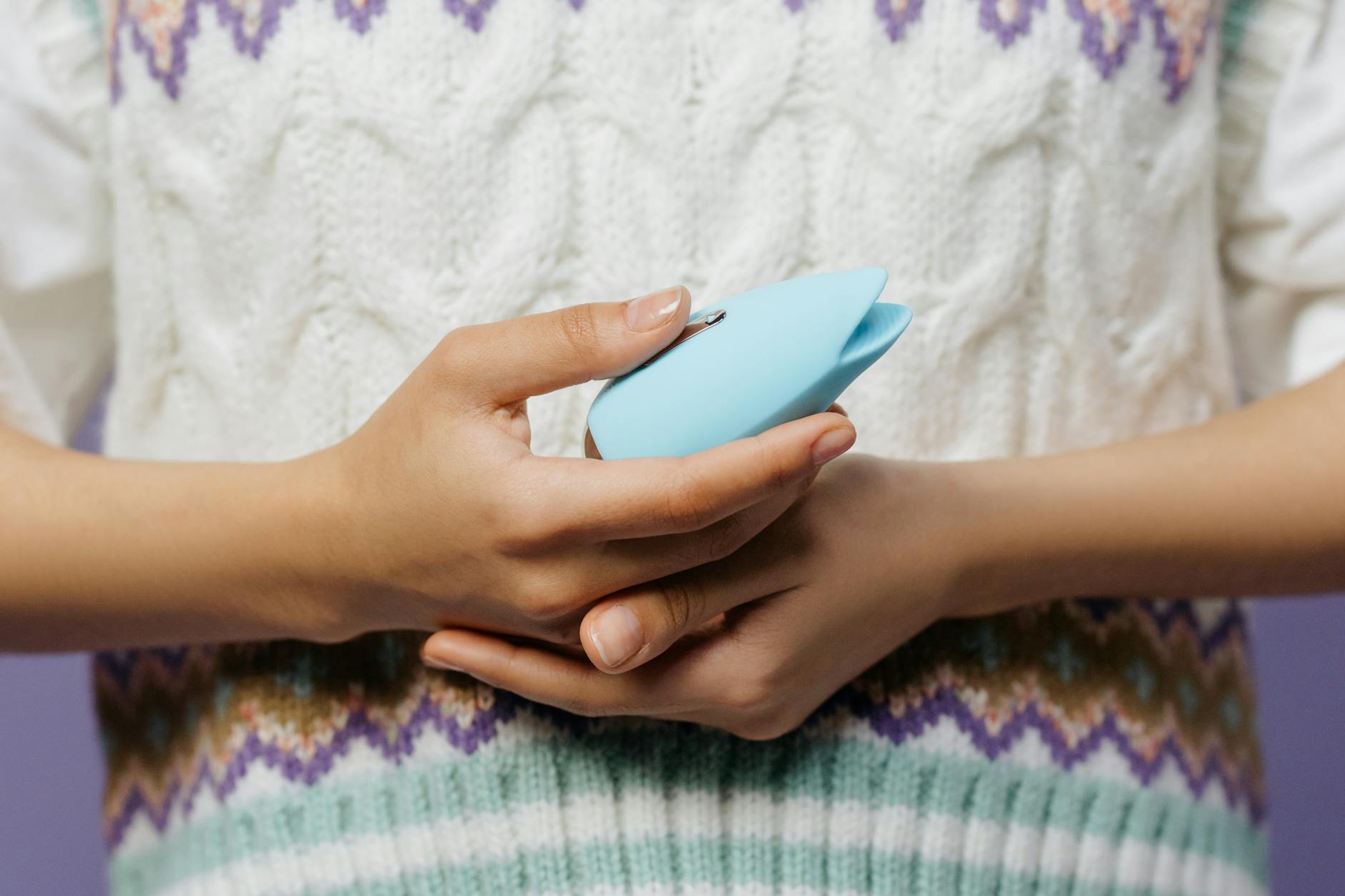
How to Use a Lemon Vibrator When Recovering From Sexual Trauma
Let's be real. Healing from sexual trauma isn't linear, and it isn't quick. One of the things that surprises people most about trauma recovery is how disconnected they feel from their own body. Not just emotionally. Physically. The signals that used to mean pleasure can suddenly mean danger. Touch that should feel good feels like a threat.
Rebulding that connection starts small. And for many people, it starts with tools that give them something the assault or violation took away: control.
The trauma response in your nervous system
When you've experienced sexual trauma, your nervous system has learned to treat arousal as a danger signal. This isn't weakness or damage. It's survival. Your body did exactly what it was supposed to do. But now you're trying to teach it that pleasure is safe again, and that's where the work gets interesting.
One of the reasons a lemon clitoral vibrator works so well for trauma recovery is simple: you control the entire experience. You decide when it touches you, where it touches, how much pressure, how long. There's no negotiation, no surprise, no dependency on someone else's boundaries or mood. That agency matters more than you might think.
Clitoral vibrators like those from Hello Nancy Lemons Shop work through suction and gentle vibration rather than penetration, which means you can explore sensation without the vulnerability that internal touch sometimes triggers.
Starting with nervous system permission
Before you even turn anything on, there's groundwork. I tell clients this: healing isn't about pushing yourself to feel good. It's about creating the conditions where feeling good becomes possible.
Three things to set up first:
1. Physical safety. Lock the door. Put your phone on silent. Make sure you have at least 20 minutes where you won't be interrupted. This isn't luxury; it's foundation. Your nervous system needs to believe nothing unexpected will happen.
2. Emotional permission. This sounds strange, but say it out loud: "I deserve to feel pleasure. This is for me." Trauma teaches us that our bodies exist for someone else. Healing means reclaiming that your pleasure is valid even when no one else is in the room, especially when no one else is in the room.
3. An exit plan. Know exactly what you'll do if sensations trigger something. Will you stop? Will you take a breath and slow down? Will you switch to something else? You're not planning for failure. You're building the safety net that lets your nervous system relax.
The first session: touching the vibrator, not yet using it
I recommend starting with the vibrator off. Hold it. Feel the weight, the texture, the shape. Let your hand get used to it. This might take 5 to 10 minutes. Your nervous system is learning: this object is not a threat. It stays where you put it. It does only what you ask.
Once that feels neutral, turn it to the lowest setting. Many lemon vibrators have 3 to 5 speed options. Start at the lowest. Don't apply it anywhere sensitive yet. Run it along your forearm. Your inner wrist. The inside of your thigh away from genitals. You're building a new neural pathway: vibration equals neutral sensation, not intrusion.
If at any point your body tightens or your mind goes somewhere dark, stop. Don't push through. This isn't about being brave. This is about listening to what your nervous system is telling you.
The second phase: introducing external sensation
When you're ready, apply the vibrator to the outer labia or mons pubis. Not directly on the clitoris yet. Keep it on the lowest setting. Move it slowly. Breathe. If you find yourself holding your breath, that's your nervous system bracing. Bring your attention to your exhales. Make them longer than your inhales. This signals safety to your parasympathetic nervous system.
You might feel nothing. You might feel numbness. You might feel something sharp or wrong. None of these responses are failures. Numbness after trauma is common and protective. Sharp sensation might be your nervous system relearning what touch means. Stay with it without judgment.
Many people find that a lemon sucker vibrator feels safer than traditional vibrators during this phase because the suction sensation is diffuse rather than pinpoint. It's less invasive, less concentrated, which can feel like you're being stimulated rather than penetrated or focused on.
Building the connection over weeks
Healing isn't about one magical session where you suddenly feel pleasure again. It's about consistency and patience. I recommend 2 to 3 sessions per week, each one following the same basic structure:
The setup: Physical space, emotional permission, exit plan.
The exploration: Start where you ended last time. Maybe you're ready to increase vibration levels slightly. Maybe you're ready to explore the clitoris directly. Maybe you need three more weeks of outer-labia work. There's no timeline. Your nervous system owns the pace.
The reflection: After each session, notice what happened without judgment. Did you feel anything? Did your body tense? Were there moments of relaxation? This data is the map. It tells you where you are in the recovery process.
Over time, your nervous system learns that this tool, this touch, this stimulation is safe because it's entirely in your control. And that reframing can shift everything.
When pleasure starts returning
Some people describe the first waves of pleasure returning as strange or unfamiliar. Your body might have been away from sensation for months or years. It's like learning to taste food again after a long illness. The sensation exists, but it takes time to recognize it.
When that happens, resist the urge to chase the pleasure. The moment you start thinking "I need to have an orgasm to prove this is working," you've stopped listening to your body and started performing for an imaginary audience. That's a familiar trauma pattern. Instead, stay curious. What does pleasure feel like now? Is it different than before? That's information, not failure.
Many people find that orgasms after trauma feel fundamentally different. Sometimes gentler. Sometimes more whole-body rather than concentrated. Sometimes they don't come at all for a long time, and then suddenly they do. The path isn't straight, and that's completely normal.
Using this with a partner, if you choose to
If you're working toward partnered sex again, the lemon vibrator can be a bridge. It's something you've already reclaimed. You know it. You trust it. Introducing it during partnered intimacy means you're controlling the most vulnerable moments.
You might use it solo while your partner is nearby, just to show them what safety looks like. You might eventually invite them to hold it, but only after you've spent weeks or months proving to yourself that it's safe. There's no rush. Rebuilding trust in other people after sexual trauma takes years, not weeks.
If you do decide to involve a partner, be clear about what you need: "This is for me. You're here to support me, not to perform." That distinction matters. One is about healing. The other is about obligation.
When to seek additional support
A clitoral vibrator is a tool, not a therapist. If you're experiencing severe trauma responses, intrusive memories, panic attacks, or complete numbness that doesn't shift even after several weeks of gentle exploration, talk to a trauma-informed therapist or counselor. Many specialize in sexual trauma recovery, and they can offer techniques like EMDR or somatic experiencing that work alongside your own healing practice.
You might also benefit from a sex therapist who works with trauma survivors. Unlike general therapists, they understand both the psychological and physical dimensions of sexual healing. They can help you navigate the specific challenge of reclaiming pleasure after violation.
The bigger picture
Healing from sexual trauma isn't about jumping back into sex. It's about reclaiming your body as yours. A tool like a lemon clitoral vibrator from Hello Nancy Lemons Shop becomes part of that reclamation because it's about your pleasure, your pace, your control. There's no expectation, no performance, no one else's needs in the equation.
Your body deserves to feel good. Not because you owe anyone pleasure. Not because you need to prove you're "over it." But because you're alive, and feeling good is one of the rights that trauma tried to steal from you. Taking it back, slowly and carefully, is an act of resistance and self-love.
Start small. Listen to your nervous system. Trust the pace it sets. And know that thousands of people have walked this road and found their way back to sensation, pleasure, and peace in their own bodies.
People also ask
Is it normal to feel nothing when using a vibrator during trauma recovery?
Completely normal. Numbness is a protective response after sexual trauma. Your nervous system is essentially saying, "I'm not safe enough to feel right now." This doesn't mean healing isn't working. It means your body is exactly where it should be in the recovery process. Keep going gently. Numbness often lifts over weeks and months as your nervous system recalibrates and learns that sensation is safe again.
How long before I can have an orgasm again after sexual trauma?
There's no standard timeline. Some people experience orgasms within weeks of starting this practice. Others need months or years. The goal isn't orgasm. Orgasm is a bonus that arrives when your nervous system is ready. The real work is rebuilding the capacity to feel pleasure without shame or fear. Focus on that, and orgasms follow their own timeline.
Can using a vibrator re-traumatize me?
It's possible if you push too fast or ignore your nervous system's signals. That's why starting slow, having an exit plan, and respecting your body's pace are essential. If at any point you feel panicked or triggered, stop. There's no prize for pushing through. Healing moves at the speed of safety, not the speed of willpower.
Should I tell my partner I'm using a vibrator for trauma recovery?
That depends on your relationship and your comfort level. If you're rebuilding trust with a partner, transparency can help. A conversation might sound like: "I'm working on healing from my past trauma. I'm using a vibrator as part of my process. I might want to share this with you eventually, but for now, I need this to be just for me." Some partners get it immediately. Some need time. Your healing isn't dependent on their understanding, though.
What if sensations feel painful or sharp instead of pleasurable?
Sharp sensation can mean your nervous system is still in protective mode, or it can mean physical tension in the pelvic floor. Try slowing down, reducing vibration intensity, or shifting to a different area. You might also explore pelvic floor relaxation exercises. If pain persists, see a pelvic floor physical therapist who specializes in trauma. They can assess whether there's tension or other physical factors at play.
Is the suction sensation of lemon vibrators better for trauma survivors than traditional vibrators?
Many trauma survivors report feeling safer with suction-based stimulation because it feels diffuse and less invasive than concentrated vibration. That said, everyone's nervous system is different. What feels safe for one person might not for another. Experiment slowly with different sensations and pay attention to what your body responds to. The best tool is the one that makes you feel most in control and most safe.
References and sources
My recommendations here are grounded in trauma-informed care principles, attachment theory, and somatic approaches to sexual healing. If you want deeper reading, I recommend seeking resources from RAINN (Rape, Abuse & Incest National Network), trauma-informed sex therapists, and books like "The Body Remembers" by Bessel van der Kolk, which explores how trauma lives in the nervous system and how embodied practices help healing.
For relationship-specific questions, consider reaching out to a Gottman Method-trained therapist or certified sex therapist in your area. Healing from trauma often requires professional support alongside your own exploration.