Let's be honest about the plateau
After five, ten, fifteen years with the same partner, pleasure often stops feeling like discovery and starts feeling like routine. You know what works. You know what doesn't. And you both know exactly how the evening will go before it even starts. That predictability is comfortable, sure, but it's also the reason many long-term couples describe their sex life as "fine" instead of "alive."
The plateau isn't a sign of failure or fading love. It's a sign that your nervous system has adapted. Your brain has learned the pattern so well that arousal requires less stimulation, not more desire. And that's actually fixable.
A lemon vibrator works for couples in this space because it introduces an element that your body can't predict. It's not about replacing intimacy with your partner. It's about giving your nervous system something genuinely new to pay attention to.
Why novelty matters more than you think
Neuroscientists call this "habituation." After months or years of the same touch, the same rhythm, the same sequence, your nervous system stops treating it as novel stimulation. It's the same reason you stop hearing the hum of a refrigerator after thirty seconds, even though it's still there.
Novelty doesn't mean you need a new partner. It means you need a new sensation that travels through the same neural pathways in a slightly different way. A lemon clitoral vibrator creates that novelty because air-suction stimulation feels fundamentally different from fingers, mouths, or traditional vibration. Your brain wakes up because it's genuinely encountering something unfamiliar.
Research on long-term couples shows that introducing new physical elements (whether toys, positions, or timing) can rebuild what researchers call "sexual enthusiasm." This isn't about performance or desire in the abstract. It's about your body remembering that pleasure is worth paying attention to.
The conversation before you bring it into the bedroom
Here's where most couples stumble. One partner buys a toy and introduces it without talking about it first, which triggers a defensive response: "Am I not enough? Do you not want me?" These are emotional reactions, not logical ones. And they bypass all the physical benefits you're hoping for.
The conversation doesn't need to be long or formal. It sounds like this:
"I've noticed our routine feels predictable, and I think I'm part of that. I want to shake things up, not because I want something different from you, but because I want to feel something different with you. I'm thinking about trying a lemon vibrator, just to see if it resets our nervous systems a bit. Would you be interested in exploring that together?"
Notice what's happening here. You're naming the issue (routine), taking responsibility (I'm part of that), and reframing the toy as a shared experiment, not a criticism. If your partner feels hesitant, ask what they're worried about specifically. Usually it's one of three things: inadequacy, loss of control, or fear it'll become the only way you can climax. Address each one directly before you bring anything into the bedroom.
If you've tried this conversation before and hit a wall, read about how to navigate this with a partner who feels threatened. The good news: most hesitation dissolves after one conversation where someone explains what the tool actually does.
How to introduce it without making it weird
Don't make it a big production. The lemon vibrator shouldn't feel like an event or a performance. It should feel like "we're trying something new because we got bored, not because something is broken."
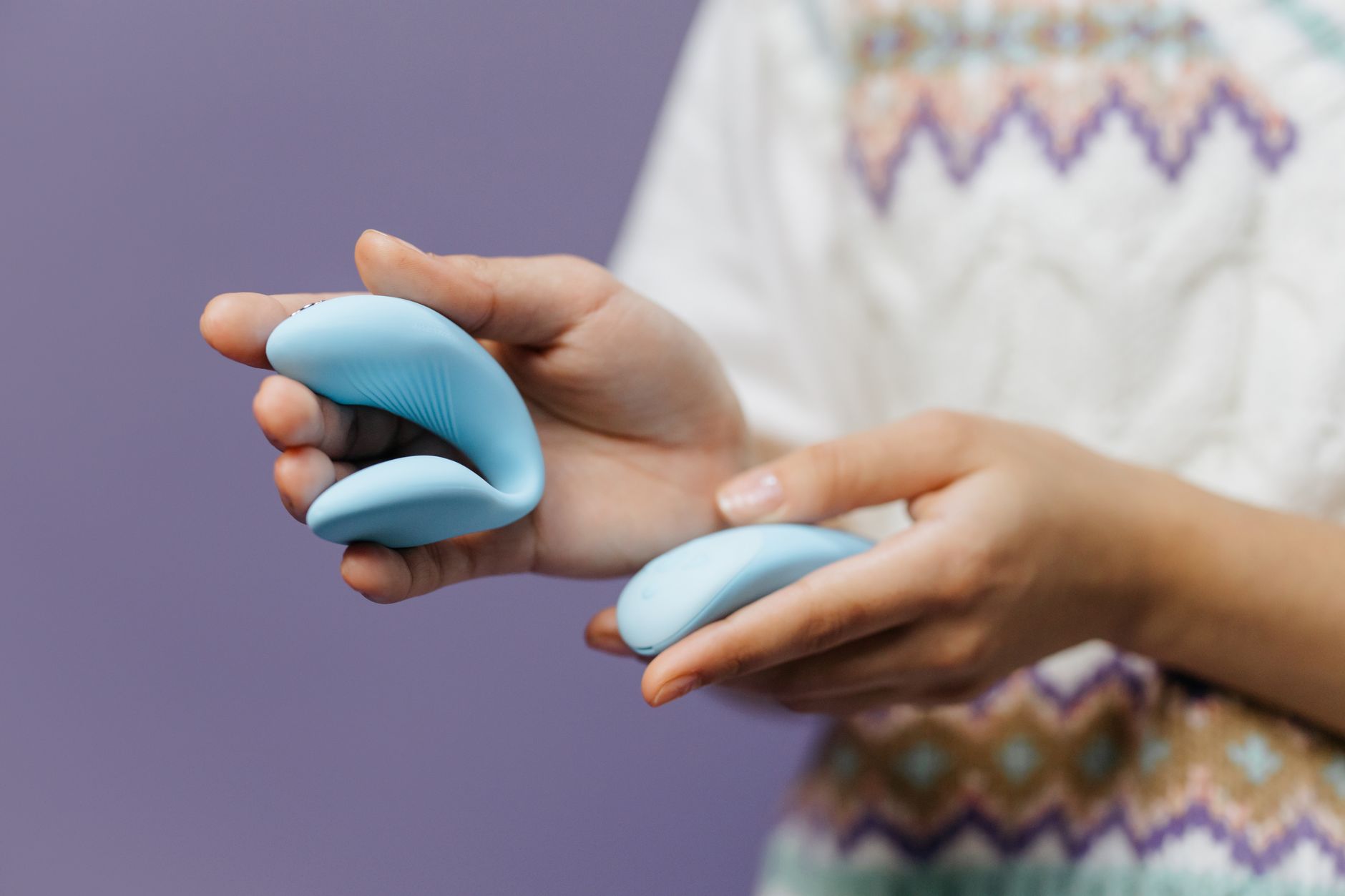
Set it up together. Have it visible on the nightstand before you're in the middle of intimate time. Let your partner hold it, turn it on, feel how the suction patterns work. Demystify it. Then do what you normally do, and when you're both aroused, introduce the vibrator the way you'd introduce a hand: as a tool your partner is controlling, not something being done to you.
Start with lower intensity patterns. The lemon vibrator (like most quality clitoral vibrators) has different suction rhythms. Try patterns 1 or 2 first. Your partner can experiment with angles and pressure while you focus on sensation. The point is exploration, not reaching climax on the first try. In fact, when couples frame it as "we're figuring this out together," orgasm becomes a bonus, not the goal.
If you're the person with the vulva, guide your partner's hand. Tell them what you're feeling. "Try a little higher." "Slower on this pattern." This turns the vibrator into a communication tool, not a replacement for them. Your partner gets to feel you respond in real time.
What actually happens to sensation
Before you use a lemon clitoral vibrator as a couple, understand what your nervous system will experience. Air-suction stimulation creates a pulling sensation that's distinct from traditional vibration. It tends to feel broader, less localized, and many people report that it builds arousal more gradually than they expected.
This is actually useful when you're trying to break a plateau. Because the sensation is new, your arousal arc will change. You might find that you take longer to warm up but that climax feels more intense or reaches a different part of your body than it usually does. That variation is exactly what your nervous system needs.
For the partner without the vulva, watching your partner experience something new is its own form of novelty. You're seeing them respond to stimulation in ways you haven't witnessed before. That's an intimacy multiplier. Many partners report that introducing a lemon vibrator actually deepened their sense of closeness because it felt collaborative, not competitive.
Building a routine that lasts
Here's the trap: you introduce the vibrator, it feels amazing, and then it becomes the new routine. Three months later you're back to predictable, just with a toy added. To avoid that, treat it as one option in a rotation, not the new normal.
Some sessions you use it, some you don't. Some sessions it's foreplay, some it's the main event, some you barely touch it. You might use it only when you're traveling, or only on weekends, or only when one of you is particularly tired and wants something that requires less energy from both of you. The variability keeps it novel.
If you're using a lemon vibrator regularly, invest in proper care. Water-based lubricant, cleaning after each use, and storage away from extreme heat will keep it working and feeling new for years. The Hello Nancy Lemons Shop has guidance on that.
When the plateau goes deeper
If introducing novelty helps but doesn't fully solve the flatness, there might be something else underneath. Sometimes a pleasure plateau is actually a disconnection plateau. You're both in the room but not really together. That's a different problem that a toy can't solve alone.
That's when couples therapy becomes useful, not because your relationship is broken, but because you need help rebuilding the kind of attention and vulnerability that makes physical intimacy feel intimate again. A therapist trained in sex-positive couples work can help you distinguish between "we're bored" and "we're disconnected." Those need different solutions.
The real outcome
When long-term couples successfully introduce a lemon clitoral vibrator, the benefit usually isn't that they suddenly have better orgasms. The benefit is that they remember that pleasure is something worth paying attention to. They remember that their body can surprise them. They rebuild the sense of play and exploration that often gets lost in years of predictable routine.
That usually translates to more frequent intimate time, less scheduled sex, and a sense that you're in this together. Which is actually the whole point.
FAQ
How long does it take for a lemon vibrator to reignite a plateau?
There's no single timeline, but most couples notice a shift within 2-3 sessions. The first time usually feels novel enough to break the routine. By the third time, you're learning what patterns and pressures work best for your body. If you're not feeling any shift after 4-5 uses, the issue might not be about sensation. Consider whether there's a deeper disconnection happening underneath.
Can using a lemon vibrator make my partner feel replaced?
It can, but usually only if you skip the conversation first. If you introduce it without talking about why, your partner might interpret it as a criticism. That's why the pre-toy conversation is non-negotiable. Frame it as something you want to experience together, not something you want instead of them.
What if my partner wants to use the vibrator on me but I feel self-conscious?
Self-consciousness usually means you're watching yourself instead of feeling yourself. The antidote is to focus on sensation instead of appearance. Close your eyes. Ask your partner to narrate what they're noticing about your response (not your looks). And remember that vulnerability is actually what deepens intimacy. If your partner chose to be with you, they're already attracted to you.
Should we use a lemon vibrator every time we're intimate?
No. Introducing novelty means introducing variety. If it becomes the only way you climax, you've just created a new routine instead of breaking the old one. Use it when it feels right, skip it other times. The unpredictability is part of what keeps it fresh.
How do I know if we're using the vibrator to avoid real problems?
If you introduce it and briefly feel more connected, then drift back to disconnection, that's a sign. A toy can enhance intimacy but it can't create intimacy from scratch. If your relationship has trust issues, communication problems, or deep resentment, a vibrator will feel like a band-aid. Address the relationship stuff first, or alongside the physical exploration.
Is there a best position for using a lemon vibrator as a couple?
Anything where you can both see each other and your partner has clear access works. Many couples like spooning (partner behind, easy access), face-to-face with the partner controlling it, or you controlling it yourself while your partner is close and involved. The best position is whatever lets your partner see you respond and lets you maintain eye contact or touch. That's what makes it intimate instead of just efficient.
Your body remembers how to be surprised
Years together don't have to mean predictable pleasure. They just mean you need to be more intentional about keeping sensation fresh. A lemon vibrator is one tool for doing that, but the real work is the conversation, the willingness to be vulnerable, and the commitment to treating your intimate life as something worth tending to.
If you're ready to explore this with your partner, start with the conversation, not the toy. Everything else follows from that. And if you want more guidance on how to navigate this with a hesitant partner or navigate other intimacy questions, reach out to the Hello Nancy Lemons Shop team. We're here to help.