When stress hijacks your desire
Let's be real: major life stress murders libido. A job loss, a move, family health crisis, financial pressure, or relationship turbulence doesn't just distract you from sex. It actually rewires your nervous system in ways that make arousal feel impossible. Your body goes into survival mode. Pleasure becomes a luxury your brain can't afford.
The good news? It's not permanent. And it's not a sign anything is wrong with you or your relationship. It's a normal neurobiological response to threat. The hard part is knowing how to rebuild desire when it feels like it might never come back.
Why stress blocks arousal at the nervous system level
When you're under sustained stress, your sympathetic nervous system stays activated. That's your fight-or-flight response. Arousal, by contrast, requires your parasympathetic nervous system to be engaged. It's the rest-and-digest mode. The two systems are fundamentally at odds.
Stress floods your body with cortisol. High cortisol suppresses testosterone production in everyone. It also narrows your attention and kills spontaneous desire. Your brain is scanning for threats, not opportunities for pleasure. Emotionally, you're also depleted. Even if your body could respond, your mind might not have space for intimacy.
The timeline matters too. Most people assume desire snaps back once the stressor passes. Sometimes it does. Often it doesn't. Your nervous system can stay in elevated alert mode for weeks or months after the crisis ends. Rebuilding arousal is not about the situation changing. It's about slowly teaching your body it's safe to want again.
Start with sensation, not performance
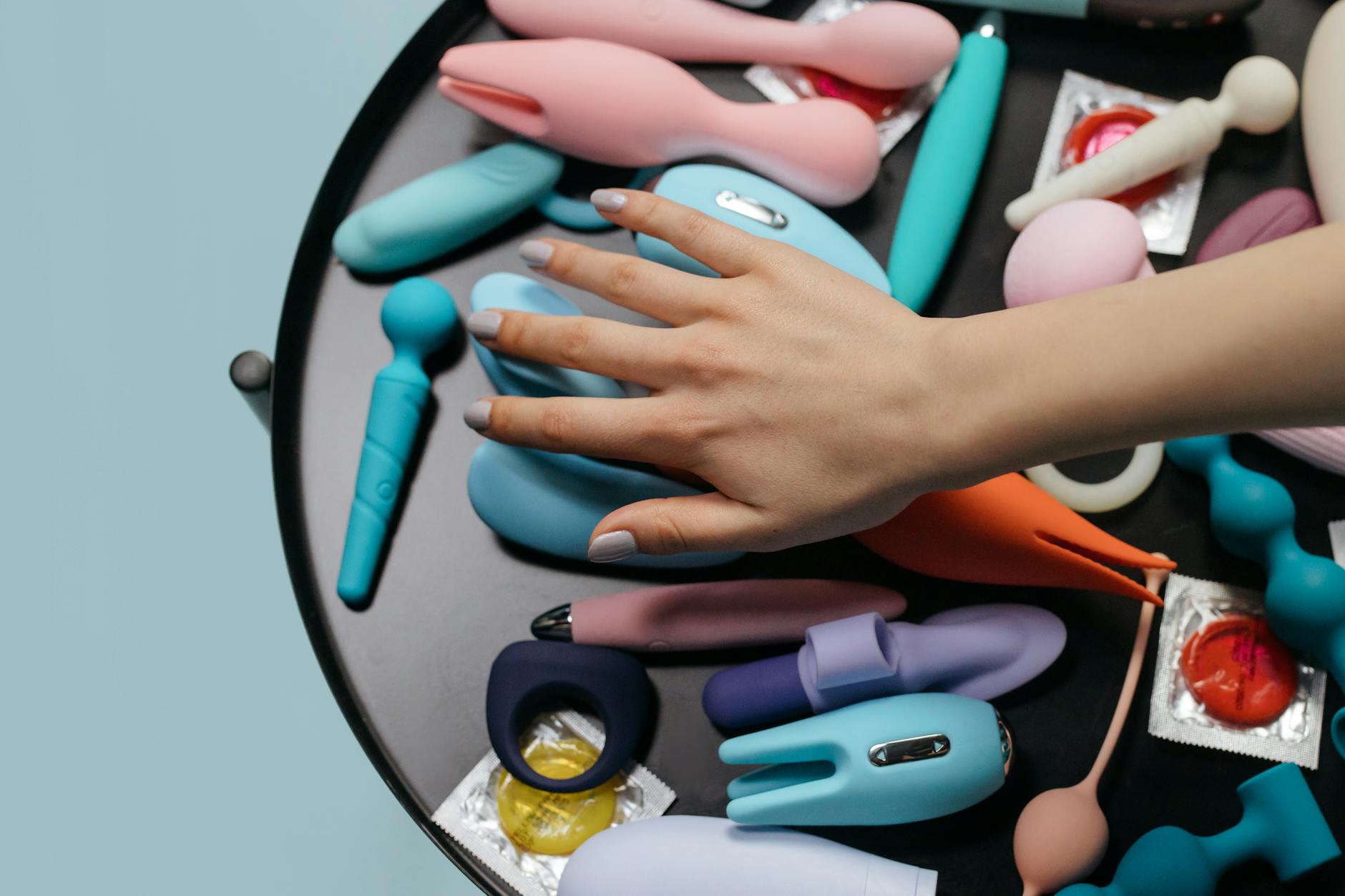
This is where a lemon clitoral vibrator becomes genuinely useful. Here's why: lemon vibrators and similar clitoral toys remove the expectation of full arousal or penetration. You're not trying to have sex. You're not trying to orgasm. You're just trying to wake up sensation.
Set aside 10 to 15 minutes when you're alone and not rushed. No partner present. No goal beyond noticing what your body feels. Start with a pattern on the lowest setting. If you have a lemon vibrator like the Lem, begin on pattern 1 and spend a few minutes just getting familiar with the sensation.
Your clitoris has between 8,000 and 10,000 nerve endings. After a long period of stress, those nerves are still there, but they're dormant. The stimulation wakes them up. You might not feel anything wild the first time. That's normal. You're not looking for an orgasm. You're looking for sensation. That's enough.
Layer in comfort and permission
One of the reasons stress kills desire is that it brings shame into the mix. You feel broken because you don't want sex. Or you feel guilty because your partner does and you don't. That shame makes it even harder to access arousal.
Before you use a lemon vibrator, give yourself explicit permission to feel nothing. Give yourself permission to feel something small. Give yourself permission to stop whenever you want. Tell yourself: I am not trying to fix myself. I'm just trying to feel something.
This reframing is not fluffy. It's neurological. Shame activates your threat-detection system. Permission activates your parasympathetic nervous system. The tool itself (whether it's a lemon sucker-style toy or another clitoral vibrator) is just the vehicle. The mental space you create is what matters most.
If you have a partner, tell them what you're doing. Not to pressure them into helping, but so they understand why you might seem distant. Give them a timeline. "I'm working on rebuilding this. I need space and patience." Most partners feel relieved just knowing you're aware of the shift and taking steps.
Use lemon vibrators to build a solo practice
Here's a counterintuitive truth: the fastest way to rebuild desire with a partner is usually to rebuild it alone first. Partnered sex carries expectations, timing pressure, and the risk of disappointing someone you love. Solo exploration has none of that.
Set a routine. Two or three times a week, spend 15 minutes with your lemon clitoral vibrator. Don't aim for orgasm. Just explore what feels good. Notice the difference between patterns on the vibrator. Notice how different parts of your clitoris respond. Notice the thoughts that come up. Are you relaxed? Judging yourself? Waiting for something to happen?
After a few weeks of this, something shifts. Your nervous system starts to learn that it's safe to feel pleasure. Your arousal capacity returns not all at once, but gradually. You'll notice you're thinking about sex more. Or fantasies will pop into your head. Or your body will respond faster when you touch yourself.
This is the nervous system healing. The lemon vibrator is the tool that helps you practice it.
Recognize the difference between desire and capacity
Sometimes after major stress, your capacity to feel pleasure returns before your actual desire does. That's fine. You might not actively want sex, but your body can respond when you stimulate it. Don't wait for desire to show up first. Capacity often comes first. Desire follows.
If you're partnered, this is important information to share. "My body can feel things again, but I'm not there mentally yet." That's vastly different from "I don't want to be touched." One is about nervous system recovery. The other is about emotional distance.
When to introduce partnered pleasure again
You don't need to wait for full desire to return before involving a partner. But you do need a few things in place first. Your solo practice should be established enough that you've had a few sessions where you felt some pleasure, even small. You should feel safe with your partner. And you should have had a conversation where expectations are low.
When you're ready to include a partner, a lemon vibrator can actually ease the transition. Many people find it less vulnerable to use a toy together than to have partnered sex when arousal feels fragile. You're both focused on the sensation the toy creates, not on penetration or traditional sex. There's less pressure to perform.
Start slow. Maybe your partner holds the vibrator while you guide them on pressure and pattern. Maybe you use it on yourself while they're present. Maybe you use it together but don't aim for anything beyond that. The point is collaboration without expectation.
The role of patience in nervous system recovery
Libido doesn't return on your timeline. It returns on your nervous system's timeline. After major life stress, that's usually four to twelve weeks, sometimes longer. If you push, you activate your threat response again and slow the whole process down.
This is where many people get stuck. They expect to feel normal after the stressor ends. When they don't, they panic. The panic itself becomes a new stressor. Using a lemon clitoral vibrator as part of a gentle, pressure-free exploration actually interrupts that panic cycle. You're taking action without forcing outcome.
FAQ: Rebuilding desire after stress
Is it normal to lose libido completely after a stressful life event?
Absolutely. Loss of desire after major stress is one of the most common patterns I see in my practice. Your body prioritizes survival over pleasure. Once the immediate crisis passes, it can take time for your nervous system to downregulate and recognize that you're safe again. This is not a sign of depression or relationship trouble, though either of those could be present alongside it. Usually, it's just biology.
How long does it typically take for libido to return after a major stressor?
It varies widely depending on the intensity of the stressor and your baseline nervous system sensitivity. For some people, it's a matter of weeks. For others, it takes several months. Importantly, recovery is not linear. You might feel interested one day and completely shut down the next. That's normal too. Tracking your own patterns over time helps you see progress even when it doesn't feel dramatic day to day.
Can using a lemon vibrator alone speed up the recovery process?
Not by itself, but it's a valuable part of the picture. A lemon clitoral vibrator helps you practice accessing pleasure in a low-pressure way. That practice trains your nervous system that it's safe to feel good. What actually speeds recovery is patience, nervous system regulation (through sleep, movement, therapy if needed), and consistent gentle exploration. The vibrator is one tool in that toolkit.
What if my partner wants sex and I don't feel ready yet?
This is worth a direct conversation. Tell them: "My nervous system is still recovering from this stress. I want to rebuild connection, but not in a way that feels pressured." Then suggest an alternative. Maybe it's using a lemon vibrator together without aiming for intercourse. Maybe it's a specific timeline you both agree on for checking in about progress. Maybe it's scheduling time for touch that doesn't have to lead to sex. Honoring your own pace actually protects your relationship long-term.
Is it different if the stress is in the relationship itself?
Yes and no. If the stress is from the relationship (betrayal, conflict, emotional distance), the nervous system impact is similar, but rebuilding desire also requires rebuilding trust. A lemon vibrator can still help you reconnect with your own pleasure capacity independently, which matters. But you'll also likely need couples work or individual therapy to address the relational wound. Solo pleasure practice and couples healing work best together in that scenario.
Should I tell my partner I'm using a vibrator to rebuild arousal?
Depends on your relationship style, but generally yes. Transparency here isn't about performance or reassurance. It's about partnership. Say something like: "I'm working on rebuilding my arousal capacity. I'm exploring solo to understand what helps my body respond again. I wanted you to know what I'm doing." Most partners appreciate knowing you're taking steps rather than just withdrawing.
The long view
Major life stress doesn't permanently kill desire. Your nervous system will recover. Arousal will return. What matters now is not forcing it, but gently, consistently creating the conditions for it to reemerge. A lemon clitoral vibrator is a tool that helps with that. But the real work is patience, self-compassion, and trusting your body's timeline.
Start with solo exploration. Let yourself feel sensation without expectation. Give your nervous system space to downregulate. Then, when the time feels right, bring your partner back in. Desire returns. It just needs time and the right support.
If you'd like guidance on rebuilding intimacy in your relationship after stress, reach out to Hello Nancy Lemons Shop or explore resources for relationship recovery.
Sources and further reading
The Gottman Institute. (2021). The science of stress and relationships. https://www.gottman.com
Porter, K., & Fredrickson, B. L. (2018). The broadening effects of positive emotional states in sexual arousal. Psychology & Health, 33(12), 1463-1481.
Boyd, K. J. (2019). The neurobiology of desire and sexual response. Annual Review of Sex Research, 30(1), 42-58.
Nagoski, E. (2015). Come as you are: The surprising new science that will transform your sex life. Scribner.