Let's talk about the thing nobody explains
Sensitivity varies wildly. What feels like a gentle buzz to one person is almost painful to another. That's not weakness or dysfunction. It's just how nervous systems work. The problem is that most vibrator guides treat sensitivity like a fixed thing, when really it's contextual, variable, and honestly, something you might discover for the first time when you actually have the toy in your hands.
Here's what I've learned after years of talking to people about their pleasure: the right lemon vibrator isn't the most powerful one. It's the one that matches how your body's wired right now, in this season of your life.
Why intensity matters way more than you think
Let me explain the physiology first, because it changes how you'll shop. Your clitoris has around 8,000 nerve endings concentrated in a space smaller than your thumbnail. That density means vibration travels through tissue efficiently. But efficiency isn't the same as comfort.
Intensity comes in two forms: amplitude (how much the toy is actually moving) and frequency (how many vibrations per second). A lemon clitoral vibrator like the Lem works through suction combined with gentle pulsing. That's mechanically different from a traditional vibrator. Suction spreads stimulation across a wider area, which often feels less intense on delicate tissue, even when the total energy output is the same.
But here's where sensitivity gets personal: if your clitoris is experiencing inflammation (from too-frequent use, hormonal shifts, or just irritation), even a low-intensity toy can feel raw. Conversely, if you're someone who benefits from direct pressure and strong rhythm, a gentle pattern might feel like nothing at all.
The sensitivity spectrum: where you probably fall
I'm going to map this honestly, without judgment.
Highly sensitive territory. If direct touch feels overwhelming, if you find yourself wincing when partners go down on you, if you've never been able to use tampons comfortably, your clitoris is likely very sensitive. You'll want something that disperses pressure. Lemon vibrators work brilliantly here because suction gentles the stimulation. Start on the lowest setting, and you might not need to go higher. Honestly, some people in this camp never move off pattern one. That's not a limitation. That's your body telling you what it needs.
Medium sensitivity. You like sensation but you're not chasing intensity. A toy that goes from pattern one to five or six gives you range without overkill. You can use a clitoral vibrator a few times a week without discomfort. This is where most people land, and it's why products with 3-6 intensity levels tend to be the sweet spot.
High sensation-seekers. You want power. Numbness is your actual concern. You like strong, fast rhythm. You might actually find subtle vibrations boring. This doesn't mean you need the most intense toy on the market. It means you need toys with consistent, reliable power at the higher end of the spectrum. A lemon sucker with six solid intensity levels, used intentionally, usually satisfies this group far better than a toy that maxes out at three.
There's also a fourth group I mention less often but absolutely exists: people whose sensitivity changes with context. Hormonal cycles, stress, medication, relationship dynamics, arousal level. A toy that felt perfect last month might feel uncomfortable this month. That's not the toy failing. It's your body communicating that conditions have shifted. The right toy for you is one with enough range that it works across multiple contexts.
Testing sensitivity before you commit to anything
Here's what I ask people to do before they buy:
Touch your inner forearm. That's your baseline. Most of your skin is roughly that sensitive. Now touch your neck. More sensitive, right? Now the inside of your wrist. Even more. Your clitoris is in that innermost category of tissue sensitivity. I say this because it helps people stop thinking of sensitivity as pathological. It's not a weakness. It's tissue that's designed to respond quickly to subtle input.
Once you know that, here's my pre-purchase test: use your fingertip on the lowest-intensity pattern. Does that feel pleasant? A little strong? Uncomfortable? That tells you everything. If your finger on the lowest setting of a lemon clitoral vibrator feels too much, you're probably not the audience for that particular toy. If it feels great, you've got a winner.
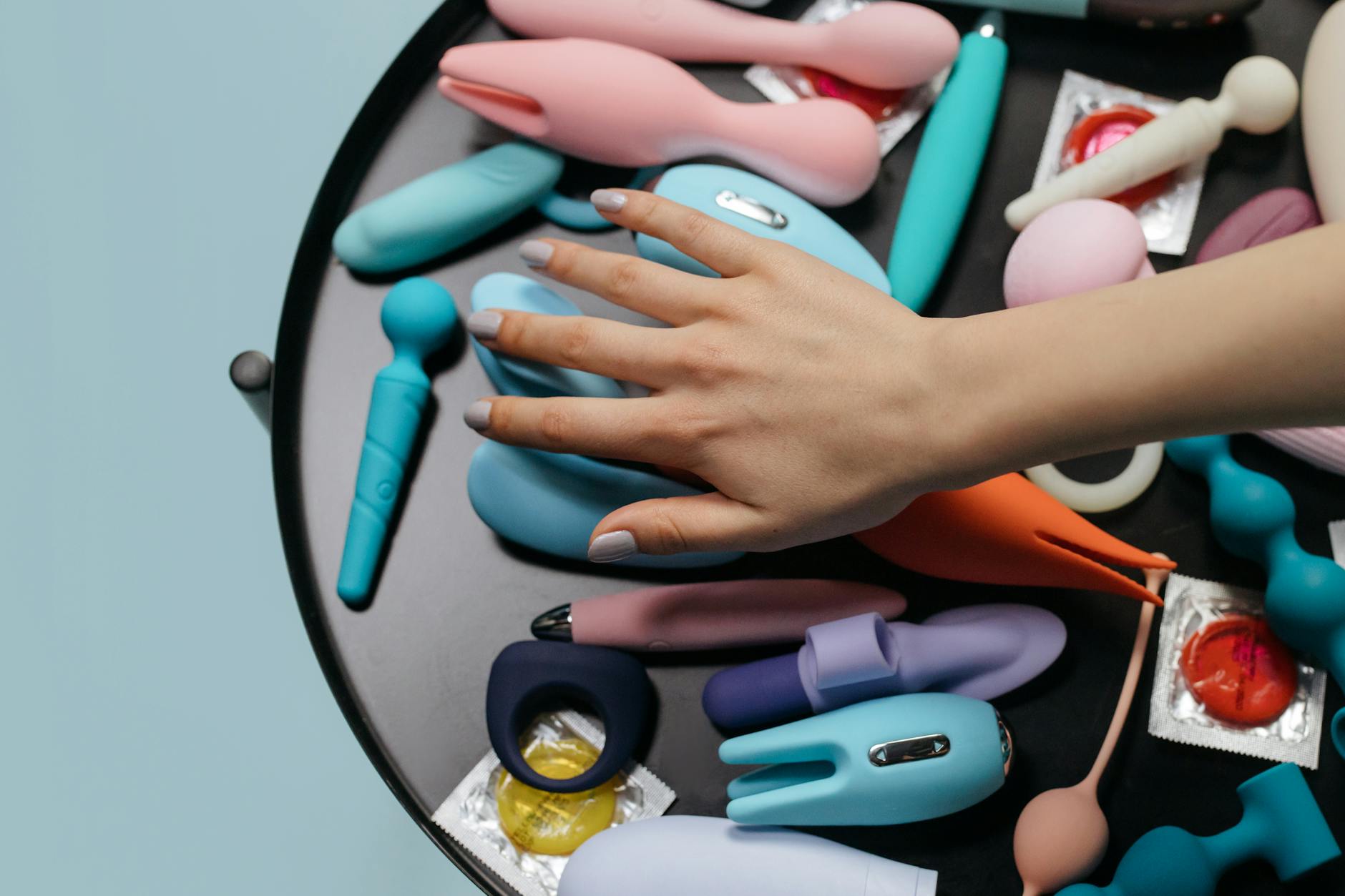
Photo by cottonbro studio on Pexels
The patterns question: why it matters more than you'd think
Intensity is one axis. Patterns are another. Some toys do simple escalating vibration: level one is slow, level six is fast. Others cycle through different rhythms. A pulsing pattern. A wave pattern. A steady rumble.
My observation: people with higher sensitivity often prefer steady patterns over complex ones. A straightforward buzz at a controlled intensity is predictable and manageable. People who find gentle vibration boring often love patterns because the variation keeps stimulation from flattening into numbness.
If you've never used a toy before, start with steady intensity options. Patterns are fun, but they're also more. You need to know your baseline before you layer in complexity.
Material and how it changes the feeling
Most clitoral vibrators and lemon vibrators are made from silicone, which is great for several reasons. Silicone doesn't degrade your lubrication. It's easy to clean. It holds temperature. But silicone does transmit vibration directly. If you're highly sensitive, that might be too much. Some people find that a toy with a slightly softer outer layer (certain brands use a dual-silicone design with a gentler exterior) feels less intense than the same vibrator in straight medical-grade silicone.
This is genuinely hard to know without holding the toy. It's why I always recommend checking return policies. If you can't test it first, buy from a place that lets you return without friction.
The arousal factor you can't skip
Here's something sensitivity charts never mention: arousal changes everything. When you're highly aroused, tissue swells slightly and becomes more tolerant of intensity. When you're not aroused, the same vibration can feel too much.
I tell people this so they understand why their toy might feel different on different occasions. It's not the toy failing. It's arousal shifting your sensitivity window. This is actually useful information because it means warm-up time genuinely matters. Spending 10-15 minutes on non-genital touch, or with a partner, or even just with your thoughts, changes how you experience your lemon vibrator.
If you're someone who struggles to get fully aroused, a toy that feels gentle at baseline is forgiving. You can use it through the warm-up phase without discomfort, and it'll feel better once arousal builds.
Common sensitivity mistakes people make
Assuming more power equals more pleasure. It doesn't. It equals more sensation. They're different. A toy that's properly calibrated to your sensitivity is going to feel infinitely better than a powerful toy that's forcing your body into defensive mode.
Thinking sensitivity means you need special toys. You don't. You need toys with lower intensity baselines and good range. Most brands offer this. Hello Nancy's lemon vibrators range across the sensitivity spectrum.
Ignoring the warm-up completely. Cold introductions rarely feel good. A lemon clitoral vibrator used on its lowest setting after 15 minutes of building arousal will feel entirely different from the same toy used cold. Invest the time.
Not adjusting for your cycle. If you menstruate, your sensitivity genuinely shifts across your cycle. Pre-ovulation, you might handle stronger intensity. Post-ovulation or during your period, you might need gentler touch. Tracking this helps you plan when to use which toy.
If you're still unsure, start here
You don't need to overthink this. If you're buying blind, choose a toy with these features: adjustable intensity (at least 3 levels), a low baseline setting that feels gentle, water-resistant construction (easier to clean, more durable), and a return policy you trust. Then use it as a learning tool. Your body will tell you what you need within the first few uses.
Sensitivity isn't a fixed trait. It's a conversation between you and your body. The right toy is the one that lets you hear what your body is actually saying, not the one that shouts over it.
People also ask
What's the difference between a lemon vibrator and a standard clitoral vibrator?
Most clitoral vibrators use direct vibration to stimulate the clitoris. Lemon vibrators, particularly designs like the Lem, use suction combined with pulsing patterns. Suction spreads stimulation across a wider surface area, which often feels gentler and less intense on sensitive tissue, even at equivalent power levels. If you've found traditional vibrators overwhelming, a lemon sucker design might be exactly what you need.
Can sensitivity change over time?
Completely. Hormonal cycles, aging, medications, stress, relationship changes, and even how frequently you use toys all shift your sensitivity. Someone might be highly sensitive in their twenties and moderate-to-high sensation-seeking in their forties. Or the reverse. That's normal. It's why a toy with adjustable intensity is an investment. It grows with you.
Should I always start on the lowest setting?
Yes. Always. You can turn intensity up. You can't turn discomfort down. Even if you think you're not sensitive, starting low gives you information. If the lowest setting feels boring, you now know you want more power. If it feels great, wonderful. But starting high and discovering it's too much often means taking a break from that toy for a few days while your tissue recovers. Not worth it.
What if a lemon vibrator still feels too intense?
Try these adjustments in order: use it only after significant warm-up time. Reduce session length to 5-10 minutes instead of longer. Apply a generous amount of lubricant. Use it over underwear or a thin fabric as a buffer. Use it on the lowest setting only. If it still feels too strong, it's probably not the right toy for your body right now. That's not a failure. It's information.
Is it normal for sensitivity to be different on different days?
Yes. Stress, hydration, sleep, where you are in your cycle, whether you've used toys recently, even what you ate that day can shift how you experience stimulation. If a toy felt good yesterday and feels too much today, you don't have a toy problem. You have a context-dependent body, which is completely normal. Give yourself grace and adjust accordingly.
How do I know if I'm actually sensitive or just not aroused enough?
This one's tricky because arousal genuinely masks or amplifies sensitivity. The honest answer: you figure it out through experimenting with warm-up time. Spend 20 minutes on foreplay or self-touch before using a toy. If intensity still feels uncomfortable, you're likely genuinely sensitive. If it suddenly feels manageable or even enjoyable, you were probably just under-aroused. Both answers are useful.
The bottom line
Your sensitivity isn't a flaw or a limitation. It's information about how your nervous system works. The right lemon vibrator, the right clitoral vibrator, the right toy period, is the one that listens to that information instead of fighting it. Start low, pay attention, and trust what your body tells you. Everything else follows from there.