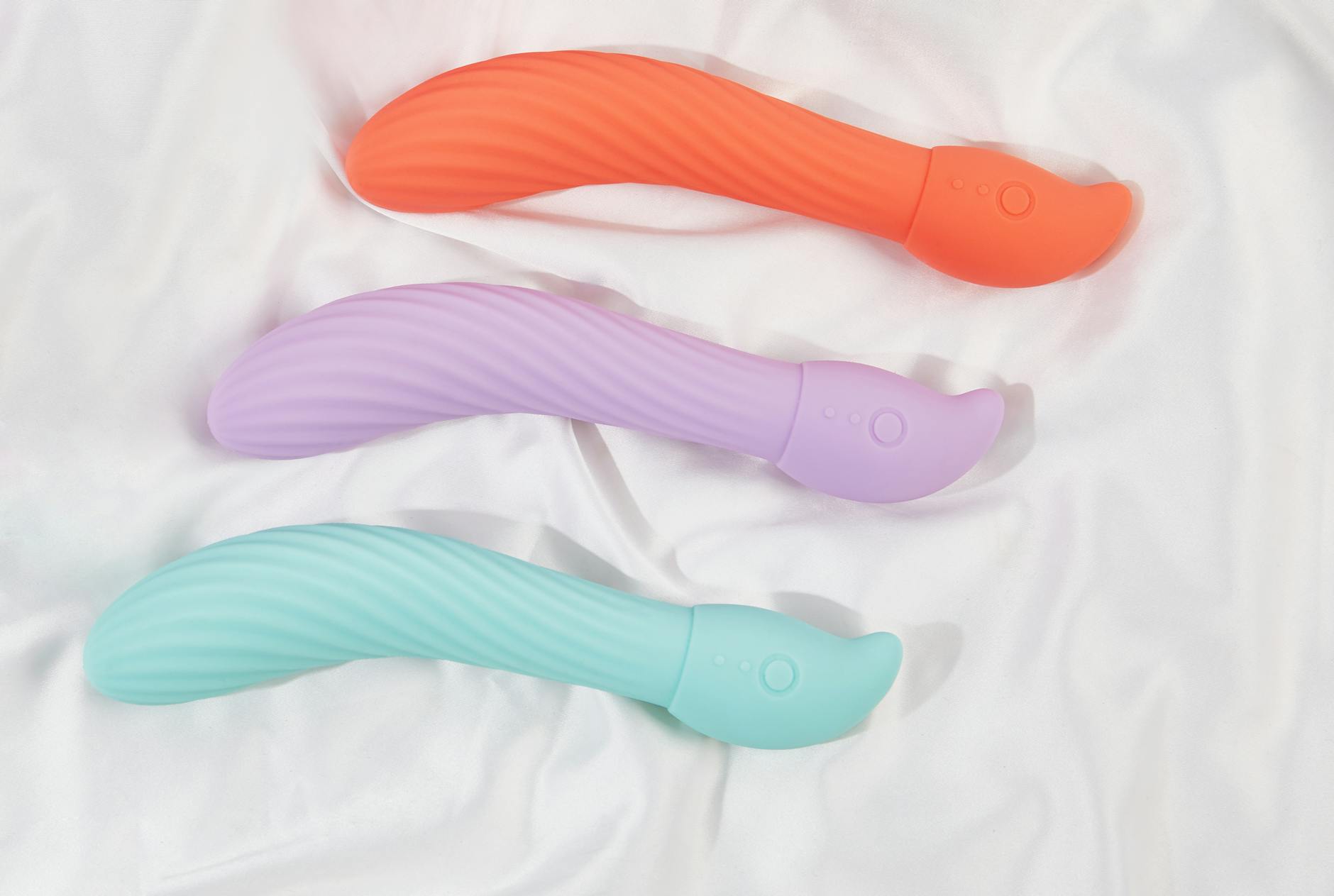
The honest version of what happens
Your lemon vibrator will feel different at 45 than it did at 25. That's not a failure. That's your body doing exactly what it's supposed to do. The question isn't whether sensation changes. It does. The real question is whether you understand how, and whether you know the difference between a temporary shift and a permanent one.
Here's what I see in my practice: people spend decades using clitoral vibrators without understanding the basic physiology underneath. Then something shifts. Sensation feels muted, or orgasms come differently, or you need more time to warm up. And most people's first instinct is to panic. "Am I broken? Is this forever?"
Usually, the answer is neither.
What hormones actually do to vibrator sensation
Estrogen is not just about fertility. It affects tissue thickness, blood flow to the genitals, natural lubrication, and the sensitivity of nerve endings in the vulva and clitoris. When estrogen fluctuates or drops, those tissues change. That's physiological fact.
But here's the part nobody explains well: the clitoris doesn't have fewer nerve endings after 40 or 50. It has the same number. What changes is the tissue surrounding it and the speed at which blood rushes to the area during arousal.
Think of it like this. A lemon vibrator's suction works by creating negative pressure against the tissue. If that tissue is thinner or less engorged, the sensation feels different. Not gone. Different. Like turning down the volume on a song you love. The melody is still there.
Progesterone, testosterone, and other hormones also matter. Many people don't realize they produce testosterone naturally. It's a major driver of sensation and desire in everyone. When it drops (which can happen with age, after childbirth, during perimenopause, or with certain medications), sensation often dulls first.
The timeline: what changes when
Thirties to forties. Most people experience very subtle changes. Your arousal might take a few minutes longer. Lubrication might need a tiny assist. But sensation is usually stable. Many people report their most intense orgasms in this decade.
Forties to early fifties. This is where the variability explodes. Some people notice nothing. Others experience their first real shift. Perimenopause (the 5-10 years leading up to menopause) causes wild hormone swings. Your lemon vibrator might feel amazing one week and require serious warm-up time the next. This is temporary, but it's real.
Fifties and beyond. Post-menopausal bodies stabilize, but at lower hormone levels. Tissue thins more noticeably. Some people report that sensation never fully returns to pre-menopausal intensity. Others find that the shift forces them to explore new patterns, discover new pleasure zones, or invest in better technique. The outcome varies wildly.
Age is a factor. So is overall health, stress, relationship satisfaction, medication, and how you use your lemon vibrator in the first place.
What you can actually control
Four things make a measurable difference.
Lubrication. I can't overstate this. A water-based lubricant isn't an admission of failure. It's a tool. Thinner tissue benefits enormously from external lubrication, especially with a lemon clitoral vibrator where suction depends on a good seal. Use it generously.
Warm-up time. Your body needs blood flow to the genitals before a vibrator can do its best work. Budget 15-20 minutes of foreplay or solo warm-up before introducing your lemon vibrator. Touch yourself first. Use hands, fingers, oral. Get the tissue engorged. Then bring in the toy.
Pattern switching. Don't assume the pattern that worked at 30 will work at 50. Many people get stuck using the highest intensity because they assume lower levels won't work anymore. Try starting at pattern 1 or 2 on your lem vibrator and building up. You might find the pleasure is cleaner, sharper, more localized at lower intensities.
Pelvic floor awareness. Kegel exercises help, but so does learning to relax your pelvic floor intentionally. A tight pelvic floor reduces sensation and makes orgasms harder to achieve. Breathwork helps. So does slow, deliberate relaxation practice.
When hormones shift significantly
If you're in perimenopause or starting to notice real changes, a few moves actually work.
First, topical estrogen cream (used vaginally) has minimal systemic absorption and can restore tissue thickness surprisingly quickly. Your doctor might prescribe it. Many gynecologists trained specifically in menopause medicine are familiar with how this helps sensation. Ask.
Second, testosterone therapy is worth discussing if desire has dropped alongside sensation loss. It's not offered routinely in the US, but it's available, and for the right person, it transforms the experience.
Third, some people benefit from simply adjusting their expectations for a season. If you're 47 and in heavy perimenopause, your lemon vibrator might not feel like it did at 35. Acknowledging that isn't giving up. It's being realistic so you can find what does work right now.
Most of these shifts are temporary. Hormones stabilize post-menopause. Tissue adapts. The body finds new patterns.
What doesn't change (and this matters)
Your clitoris has thousands of nerve endings. Age doesn't reduce that number. Your capacity for orgasm doesn't disappear. Your brain's pleasure circuitry doesn't decline. Women report some of the most satisfying lemon vibrator experiences of their lives in their 50s and 60s.
Sometimes a dull sensation isn't hormonal at all. It's psychological. Stress, depression, a struggling relationship, or just the mental load of midlife can flatten sensation completely. You can use the best lemon sexual toys available and feel nothing if your brain isn't engaged.
This is why talking to your partner (if you have one) about what's happening is crucial. "My lemon vibrator doesn't feel the same" is different from "I'm stressed and disconnected." One is technical. One is relational. Confusing them leads nowhere.
The reframe that actually helps
I work with a lot of people who assume that a shift in sensation means the end of their pleasure life. It doesn't. It means the beginning of a new chapter where technique, tools, and intention matter more than they used to.
Some of my clients in their late forties and early fifties discovered their most intense orgasms after making small adjustments to how they use a lemon vibrator. Better lubrication. Longer warm-up. A fresh partnership or relationship stage. Permission to explore patterns they'd never tried.
Your body isn't failing you. It's changing. And change, managed with information and patience, is often an invitation to better pleasure, not the end of it.
Frequently asked questions
Does a lemon vibrator feel weaker as you get older?
Not necessarily weaker. Different. The sensation might be more localized, less intense at the surface, or require more warm-up time. But many people find they enjoy the lem vibrator more at 45 than at 25 because they understand their body better, have less performance pressure, and are more intentional about pleasure. Start with a lower pattern and see.
Can hormonal birth control change lemon vibrator sensation?
Yes. Birth control hormones can dampen desire and sensation, especially in the first few months. If you're noticing muted sensation after starting a new pill or IUD, give it at least 3 months. Some people find their body adjusts. Others never do and switch methods. It's worth tracking.
Will my lemon clitoral vibrator feel normal again after menopause?
Most likely, yes, but on a new baseline. Your body stabilizes about 1-2 years post-menopause, and many people find sensation returns to a sustainable level. It might not feel identical to your 30s, but it stabilizes. Patience and the adjustments mentioned above (lubrication, warm-up, pattern adjustment) usually help.
Does using a lemon vibrator too often reduce sensation permanently?
Temporary numbness is common if you use your lem vibrator intensively every single day. Most people recover full sensation within 2-4 weeks of taking a break. But there's no research showing permanent nerve damage from regular vibrator use. Your body rebounds. For sustainable pleasure, give yourself at least 1-2 days off per week.
Can stress and anxiety flatten lemon vibrator sensation?
Completely. Stress floods your body with cortisol, which constricts blood vessels and suppresses arousal hormones. Your lemon sexual toys won't help if your nervous system is in fight-or-flight mode. Sleep, exercise, therapy, and actually addressing the stress source matter more than the toy. Don't blame the vibrator for what's a nervous system issue.
Is sensation loss at 40+ reversible?
Often yes. Especially if it's hormone-driven. Topical estrogen, testosterone therapy, better lubrication, and pelvic floor work all show real results. If it's stress or relationship-driven, addressing those sources usually restores sensation quickly. Get a proper evaluation from a menopause-trained doctor to rule out medical causes first.
The bottom line
Your lemon vibrator will feel different across the decades. Hormones change tissue, blood flow, and sensitivity. But different doesn't mean broken. With information, adjustment, and sometimes medical support, pleasure is absolutely sustainable at every age.
If you're noticing changes right now, start with the basics. Use more lubrication. Budget more warm-up time. Try lower patterns first. Talk to your partner about what's happening. And if something feels seriously off, talk to a gynecologist trained in menopause or sexual health. Most sensation shifts have straightforward solutions.
Your body isn't failing you. It's asking you to pay attention.
Want to explore what's right for your body at this stage? Contact Hello Nancy and we can talk through the specifics of what you're experiencing.