
Here's the thing about desire fading
It's not that you stop wanting pleasure. It's that the familiar becomes invisible. After five, ten, or twenty years together, the same touch, same rhythm, same context blurs into the background. Your brain stops registering it as novel. And without novelty, your nervous system doesn't fire up the way it once did.
That's not a relationship problem yet. It's a nervous system problem.
The physiology of desire in long-term partnerships
When you're with the same partner for years, your body adapts. Psychologically, that's comforting. Neurologically, it's a problem. Your brain craves novelty for sexual arousal to spike. This isn't about your partner being boring or your love being shallow. It's pure neurobiology.
Research on long-term couples shows that sexual desire drops most sharply between years three and five, then stabilizes at a lower baseline. But here's what researchers also found: couples who introduce new sensations, textures, or tools frequently report a resurgence in desire. Not because the tool is magic, but because novelty reactivates the arousal circuits that repetition had turned down.
A lemon clitoral vibrator reintroduces that element. The suction sensation is fundamentally different from what your partner's hand or body provides. It's not about substitution. It's about giving your nervous system something it hasn't felt before.
Why suction works differently than traditional vibration
Most couples who've been together for years have already tried standard vibrators. Buzzing feels familiar by now. Suction, though, is a different stimulus entirely. Air-pulse technology like what you get with a lemon vibrator creates a gentle rhythmic squeeze rather than vibration. This engages different nerve endings and creates a more concentrated, focused sensation.
When your body encounters something truly novel, arousal kicks in differently. You're not trying to feel something you've felt a hundred times. You're genuinely curious. That curiosity alone shifts the neurochemistry of the experience.
For people in long-term relationships, this can be the entry point back to desire. It's not about your partner failing to arouse you. It's about your body getting permission to feel something fresh.
Using a lemon vibrator solo first matters
Many couples think the tool should bridge them closer together. But the most effective pathway in low-desire situations is actually solo exploration first. When you use a lemon vibrator alone, you're not performing for anyone. You're not managing your partner's ego or your own self-consciousness. You're purely investigating sensation.
This matters because low desire in long-term relationships often carries performance anxiety underneath. You might worry that you're not responding fast enough, or that your partner feels rejected. Those worries kill arousal further. Solo play removes that layer entirely.
When you rediscover your own capacity for pleasure independent of your partner, three things shift. First, you remember that pleasure is available to you. Second, you release the pressure on your partner to "fix" your desire. Third, you can then choose to bring that reconnected pleasure back into the relationship from a place of abundance, not scarcity.
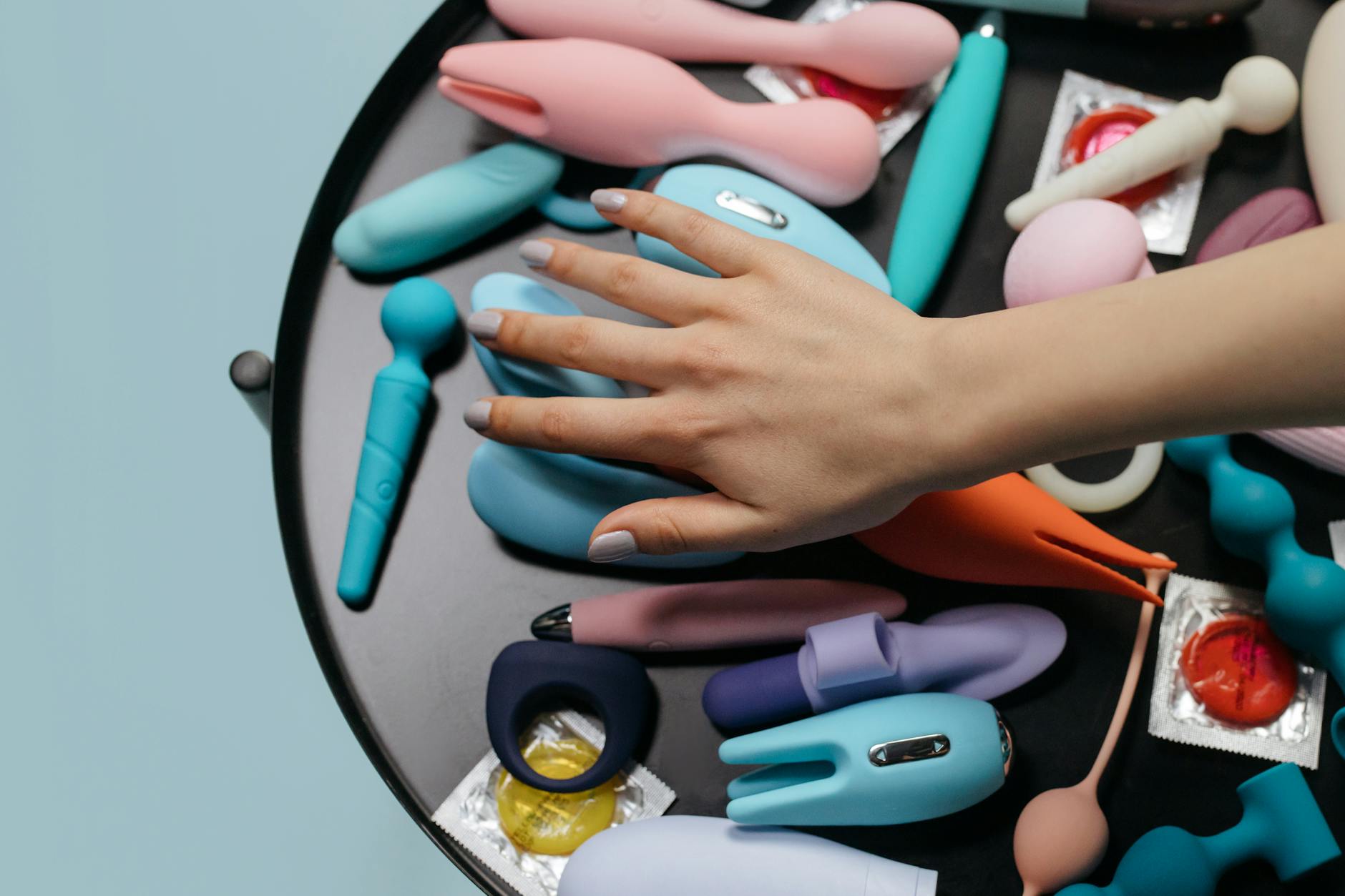
Photo by cottonbro studio on Pexels
The role of novelty in couples' desire
I've worked with hundreds of long-term couples, and the pattern is consistent: the ones who actively introduce new elements back into their intimate life report higher satisfaction overall. A lemon vibrator is one concrete way to do that.
But the introduction has to be intentional, not apologetic. If you approach it as "something is wrong with me and this might help," your partner will sense that and the conversation gets defensive. If you approach it as "I want to explore sensation with you and I'm curious about this," the door opens differently.
The couples I see thrive are the ones who can say: I'm not less attracted to you. My desire has flatlined because my nervous system got used to the same input. Let's deliberately change the input. That conversation is evidence-based and collaborative.
Practical steps if you're considering this
If low desire is an issue in your relationship, starting with a lemon clitoral vibrator makes sense for a few reasons. They're designed for clitoral stimulation specifically, which is the most direct path to pleasure for most people with vulvas. The suction sensation is genuinely novel if you haven't used air-pulse technology before. And exploring solo first removes performance pressure.
Budget fifteen to twenty minutes for your first exploration. No goal of orgasm. Just curiosity. Start at lower suction levels and work up. You're mapping what feels good, not chasing an outcome.
If you decide to eventually bring this into partnered play, the conversation is straightforward: "I've been exploring sensation, and I want to show you what I discovered." That's invitation, not critique.
When low desire is deeper than novelty
Here's the honest part: sometimes low desire isn't actually about the relationship. It's depression, burnout, hormonal shifts, or unresolved resentment. A toy won't fix those. But a toy can help you figure out what's actually going on.
If you explore sensation solo and you feel nothing, that's information. That says the issue isn't boredom in the relationship. That says something else needs attention. Maybe it's a conversation with your partner about emotional disconnection. Maybe it's a visit to your doctor to rule out hormonal or medical factors.
But if you explore and you feel a spark, that's also information. That says your body still knows how to want. Your desire isn't broken. It just needed a reset.
The relationship conversation matters more than the tool
The actual lemon vibrator is secondary. What matters is that using one opens a conversation with yourself first, and potentially with your partner after. That conversation is: my pleasure matters. My desire is worth investigating. I'm willing to be curious instead of resigned.
Long-term relationships coast on stability, not novelty. That's not bad. But if coasting includes giving up on pleasure, something real is lost. Introducing a tool like a lemon clitoral vibrator is just one way of saying: I want to keep feeling alive in this relationship. I want to want you again, and I'm willing to do the work to get there.
Your desire didn't disappear. It just got quiet. And sometimes quiet things need a clear signal to wake back up.
People also ask
Can a lemon vibrator actually fix a sexless marriage?
A toy alone won't save a sexless marriage, but it can be the spark that starts a conversation. Low or absent desire in long-term relationships usually points to emotional disconnection, resentment, or unmet needs outside the bedroom. A lemon clitoral vibrator can help you rediscover your own pleasure capacity, which can shift your energy and openness. But if the core issues are emotional distance or unaddressed conflict, you'll need to address those too. That might mean couples therapy or a real conversation with your partner about what's missing.
Will my partner feel replaced if I use a lemon vibrator?
Partners often feel replaced only if the tool is introduced as an accusation or a criticism. If you approach it as "my desire is flatlined and I want to explore what helps," most partners respond with curiosity, not defensiveness. The key is being transparent and invitational. Let your partner know you're interested in reigniting sensation together eventually, but you want to start solo first. That's honest and collaborative.
How do I start using a lemon vibrator if I'm embarrassed?
Embarrassment usually fades once you're actually alone with the device. Lock the door, silence your phone, and approach it like an experiment rather than a performance. There's no audience. There's no pressure to respond a certain way. You're literally just learning about your own body. Solo exploration with something like a lemon clitoral vibrator is one of the least performative sexual activities you can do.
Can a lemon vibrator help if I've never had an orgasm in my long-term relationship?
Yes, frequently. If you've never orgasmed with your partner but desire was higher early on, that often points to performance anxiety or misaligned stimulation rather than anything broken about you. A lemon vibrator gives you direct, focused clitoral stimulation without the performance pressure of partnered sex. Many people discover their orgasm capacity solo first, then bring that knowledge back into the relationship. It's not about the toy being better than your partner. It's about removing performance pressure so your body can actually respond.
Should I ask my partner's permission before using a lemon vibrator?
You don't need permission for solo exploration. Your body is yours. That said, transparency is usually wise. Saying "I'm going to explore some new sensation on my own, I'm curious" is different from hiding it. Most partners appreciate the honesty. If your partner reacts poorly to you exploring your own pleasure, that's actually important information about the relationship that deserves its own conversation.
How long does it take to feel a shift in desire after using a lemon vibrator?
Some people feel a spark immediately. Others need three to five sessions to genuinely reconnect with sensation. There's no timeline. The point isn't to manufacture desire on schedule. It's to give your nervous system something novel enough that arousal circuits actually activate. Once they do, once you remember what pleasure feels like, you can start making choices about how to bring that energy back into your relationship.
The real work is the conversation
A lemon vibrator is a tool. The actual healing in a long-term relationship with faded desire is always the conversation. It's you recognizing that your pleasure matters. It's your partner understanding that low desire isn't rejection, it's a system that's been overstimulated by repetition. It's both of you deciding that feeling alive together is worth the awkwardness of trying something new.
Toys help. Conversations do the real work. Start with solo exploration if desire is low. Let yourself feel curious instead of broken. And when you're ready, invite your partner into that rediscovered pleasure. That's how long-term relationships stay alive.